Saturday, June 9, 2012

Australian Resuscitation Council (Victorian Branch) 5th State Conference. Resuscitation 2012: Translating Evidence into Practice


Australian Resuscitation Council (Victorian Branch) 5th State Conference. Resuscitation 2012: Translating Evidence into Practice.
Saturday 2 June 2012
Australian Resuscitation Council: www.resus.org.au


This was another excellent conference and networking opportunity. There was also a trade display exhibiting a number of new innovations in resuscitation equipment.

The organising committee (all volunteers) did a wonderful job.

Attendees received a 'showbag' on arrival, which included:
- program, name tag and ballpoint pen;
- Statement of Participation;
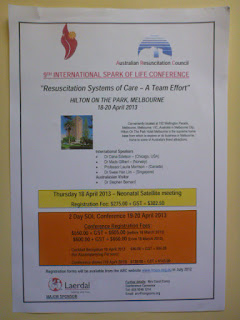
- flier for the next ARC conference (18-20 April 2013 in Melbourne);
- Mayo Healthcare information on i-gel supraglottic airway, Disposable Resuscitator and EZ-IO intraossesous access system;
- information on Cardiac Science Power Heart AED;
- Everyday Learning CPR Training Manual, BLS pocket card and information brochure (www.everydaylearning.com.au) [Note: The CPR guide is a very high quality resource]; and
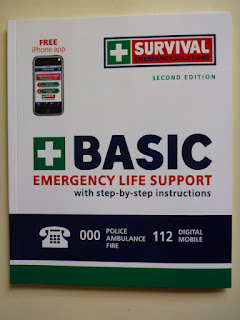
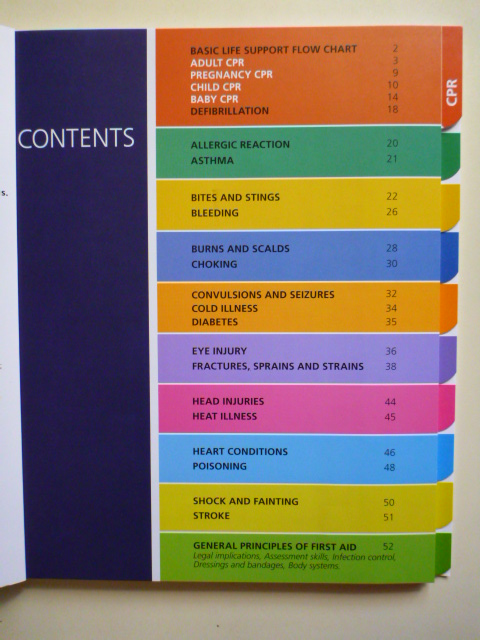
- Survival Emergency Solutions CPR Emergency Handbook, Basic Emergency Life Support Guide, First Aid Emergency Handbook and instructions for downloading their iFirstAid app and the ePulication for the Emergency Handbook (www.survival.net.au).

Mayo Healthcare gave away some CPR Pocket Masks (and pens) to people who visited their table, and Survival saved the best until last. Attendees who remained until after afternoon tea were given a free first aid kit. There were three different types and sizes, but I was fortunate to be one of the first in line and received one of the large 'Survival First Aid Kits' - perfect for wilderness first aid! (Photographs of the "goodies" appear at the end of this posting.)

The Welcome by Associate Professor Tony Walker, Chair of the Victorian Branch, was followed by a very personal presentation by Matt Parkinson, Comedian, Actor, Radio Presenter and cardiac arrest survivor. He told with humour and heartfelt gratitude the story of his journey from arresting at an indoor cricket game through a period of unconsciousness and therapeutic hypothermia in ICU to insertion of an implantable defibrillator and his return home and resumption of his normal life. His mates were able to commence CPR and keep him alive until the cavalry arrived, and for those present in the auditorium it was a wonderful reminder that first aid and CPR can save lives and "make a difference".

Print-outs of the Powerpoint presentations by the other speakers were not available at the time of the conference, so I made some brief written notes for each presentation and these have been typed up and can be found below.

Professor Ian Jacobs, National Chair of the ARC and Co-Chair of the International Liaison Committee on Resuscitation (ILCOR) spoke next on "Guideline Changes: Has outcome improved?".

ILCOR was formed in 1994 and has representatives from North and South America, Europe, Asia, Australia and New Zealand and South Africa. It carries out systematic reviews of resuscitation science on five-yearly basis, with the next review due in 2015. There are two major peer-reviewed journals dealing with resuscitation matters - Circulation and Resuscitation.

ILCOR is now moving towards continuous evidence evaluation reviews as opposed to the old system of 'batch and queue' PICO questions. In 2013 ILCOR will meet at the Spark of Life Conference in Melbourne. For each major update it plans to produce a ~30 page summary of each set of updates and other changes will be made as needed based on the evidence, not just every five years. It currently uses its own system for evaluation and labelling of evidence but for 2015 will move to GRADE.

The Utstein Templates for Resuscitation Registries measure and report like with like (reporting outcomes). These have been revised from the original templates (2004). There will be a further review in Vienna in 2012 (to be published mid-2013). The rather humorous "Tony Smith Modification to the Levels of Evidence" was presented.

The question was asked "Has survival improved?". The change from stacked shocks and one minute of CPR seemed to change home discharge from around 25% to around 35% in one study. Other studies (2000-2005) showed a modest improvement. Overall there is a small improvement, but other factors could be contributing e.g., improved community awareness, AED access, etc. However, there is also an issue of quality in CPR - a study by Ornato et al on errors in resuscitation demonstrated that these lead to less ROSC (return of spontaneous circulation), 24 hour survival and survival to discharge. As a result we need to focus on the implementation of Guidelines - do we do what we say or think we are doing?

The next speaker prior to morning tea was Professor Judith Finn, Director of the newly established Australian Resuscitation Outcomes Consortium (Aus-ROC). Her presentation provided an overview of the structure, purpose and planned activities of Aus-ROC and discussed the need for building collaborative research networks in resuscitation.

OHCA (out-of-hospital cardiac arrest) is a leading cause of death. In the USA this affects around 310,000 people per year. The statistics are not well captured in Australia. Another paper by Ornato discusses how research prioritisation and funding is not commensurate with need. For cardiac arrest (as opposed to acute myocardial infarction, stroke and heart failure) and resuscitation there is a very low number of funded studies per 10,000 deaths. Case fatality overall is around 90%. There has been little improvement in survival outcomes over time.

In North America there is the Resuscitation Outcomes Consortium and ROC Epistry (Epidemiological Registry). In a study amongst the member States there was regional variation in survival to discharge of 3% to 16.5%. In Australia in 2008 this was between 8.4% and 12.4% (EMS-treated). What are the confounders? What are the reasons for the differences?

Aus-ROC was recently established to be a multi-centre research and clinical trial coordinating body. This is presently just re cardiac arrest. There are plans to establish an 'Epistry'. The 'Chain of Survival' diagram demonstrates that good outcomes are system-based. Post-resuscitation care is also an issue that needs attention. The RINSE (paramedic) study has been looking at rapid cooling during CPR using cooled normal saline.

There are a number of ways that we can build capacity in resuscitation science, but this beings with building relationships. Funding is worthwhile from an economic perspective as practitioners are doing their best to return people to taxpayer status! At present there is $2.5million funding from the NHMRC, which is funding some post-doctoral researchers, PhD students and a part-time Director and administrative support.

After morning tea Associate Professor Julie Considine, Chair of the Basic Life Support Committee of the ARC spoke on "Basic Life Support: Understanding BLS practice from an evidence-based perspective".

The best way to get good outcomes from cardiac arrest is to prevent them from happening in the first place e.g., recognition and care of the deteriorating patient.

Danger - move someone if you have to .
Positioning:
- if unconscious/breathing, turn to lateral position; and
- face down and unresponsive - roll to supine position.
Response - signs of life removed: now unresponsive and not breathing normally.
Send for help - principle more important than actual timing.

Airway:
- takes precedence over neck;
- no need to routinely roll onto side;
- adults/children - head tilt/chin lift;
- infants - neutral; and
- finger sweep - not routinely (but yes if solid material visible).
Choking - Heimlich not recommended (evidence of harm) but still used internationally.

Breathing:
- look/listen/feel;
- now compressions then ventilations (may be different in drowning scenario/Surf Lifesaving; and
- rescue breathing - various options;
- make sure it is working; and
- may need two people for BVM.

Compressions-only CPR permissible.
During the first five minutes of cardiac arrest adults maintain an O2 saturation over 80-85%.
Ventilation not so important as opposed to uninterrupted cardiac compressions.
Cardiac arrest is not a normal physiological state, therefore reduced need for ventilation.
Over-ventilation common during CPR:
- hyperventilation/excessive tidal volumes especially if using BVM; and
- potentially harmful effects.
Barrier devices are probably helpful

Compressions - lower half of sternum; and 
- pulse check unreliable.
Technique/Depth/Rate/Quality Control/Risks.
Chest compressions:
- 25-30% normal cardiac output;
- Systolic BP 60 to 80mmHg;
- Cerebral blood flow 30-40% of normal; and
- Coronary blood flow 10-20% of normal.
Coronary perfusion pressure has a direct correlation with ROSC e.g., CPP over 15mmHg.
With 30:2 keeping CPP up higher for longer.
Even experts have room for improvement technique-wise.

AEDs have a role both in and out of hospitals - accurately identify rhythms as shockable/non-shockable.
Pad placement and size:
- standard adult pads can be used in adults and children from 8 years of age; and
- can use in a child under 8 if there is no other option available.
Skin contact very important for successful defibrillation.
Safety - no reports of harm (with soft gel pads) in wet environments or presence of oxygen.
VF (ventricular fibrillation) rarely reverts spontaneously - need defibrillation.
Generally successful if occurs under 10 minutes post-arrest, but CPR can extend window.

Next we experienced a 'high octane' presentation by Associate Professor Peter Morley, Deputy National Chair and Chair of the Advanced Life Support Committee of the ARC on "Advanced Life Support: Understanding ALS practice from an evidence-based perspective".

Due to the high volume of slides and the fast pace, it was not possible to record more than a very rudimentary summary of this talk.

Answerable questions and worksheet links can be found on the ILCOR website.
Evidence supports better outcomes with ALS CPR.
Quality-wise could do better.
Too fast/too slow.
Ventilations too fast.
Compressions too shallow - depth over 5cm (5-6cm) (or 1/3 of the depth of the chest) (children 5cm, infants 4cm).
No benefit in going too fast - fatigue/leaning/cycles too short.
Metronomes can be useful.
"Goldilocks Principle".

Longer pre-shock pause - shock success less likely.
Charging defibrillator during compressions can save time.
Drugs in CPR - short-term benefits but not statistically significant in survival.

ETCO2 parallels pulmonary vascular flow.
Animal model - even 12 breaths per minute too much.
Advanced airway: 15:1 (better to synchronise).
5-6 breaths/minute probably ideal; presently in Guidelines 8-10 breaths/minute.
Mechanical CPR - promising but insufficient data at present.
(Hawthorne Effect - people perform better when aware being observed.)
Benefits from regular teaching and monthly practice (study re nurses).

Then it was time for lunch! The first presentation after lunch was by Dr Ken Winkel, Director of the Australian Venom Research Institute on "Research Translation: Snakebite in Papua New Guinea: Wokabaut wantaim - raka hebou - Walking Together".

Community first aid and application is very important in management of venomous bites and stings. This is a case of translation of research into practice. Australian and PNG snakebite issues are similar.

Injury, disability and mortality are all factors. Limb loss about 250,000 - 400,000p.a. worldwide (necrotising venom). Mortality around 80,000 - 125,000p.a. Snakebite = a neglected tropical disease. Annual cases about 4.5 - 5.4 million worldwide. Asia/Africa/South America - children can be especially vulnerable.

PNG and Australia - a single antivenom can be used for all snakebites (AVG Polyvalent). Snakebite fatality about 100x in PNG. Transportation challenges, long transfers, lack of resources. Savannah grassland - perfect taipan habitat. PNG: mean time ~4 hours to presentation (range 15mins to 48 hours).

Need to disseminiate teaching, bandages re pressure immobilisation techniques. Using another supplier to produce a similar but much cheaper antivenom. More than 1/2 ICU beds are used for snakebite (antivenom may not be available; too costly). Mortality: 15% adults, 26% paediatric. Rural: 33/100,000/year. People were rationing antivenom, only using a bit of it, waiting until someone was really sick. Need to use it early at the first sign of neurotoxicity. No dialysis in PNG.

Have set up a global snakebite initiative. Antivenom is the most cost-effective medicine in the world.

The next speaker was Associate Prfoessor Stephen Bernard, Intensive Care Specialist, Alfred Hospital, and Medical Advisor, Ambulance Victoria. He spoke on the topic of "What will post-arrest management look like in 2020?".

For instance, the person affected will be taken to the post-arrest centre for evaluation by the cardiac arrest team. Management is likely to include an SBP>100, no supplemental inspired oxygen, therapeutic hypothermia and sedation. Patients will be transported to a major cardiac centre in the same way that they are now transported to a major trauma centre. Some studies have shown better outcomes if patients are transported to a hospital that is also a major trauma centre - teamwork approach.

Increasing animal data shows that 100% oxygen may be harmful post-arrest. Bad for the brain and the heart. Exaggerated reperfusion injury. A review in Resuscitation April 2012 - pooled results favour normoxia after ROSC. An ICU study showed an association between PaO2 on first ABG after arrest and in-hospital mortality. Normoxia was more favourable. How do you provide different fractions of O2 in an ambulance (don't have blenders)? How reliable is the pulse oximeter?

Proposed Australian/NZ study for hyperoxia versus normoxia. AVOID trial - STEMI patients allocated to supplemental O2 or no supplemental O2 (?higher levels of O2 increase cardiac injury).

Push SBP 100mmHg. Improve oxygen delivery, minimise adverse cardiac effects (some research to support this).

Transport to cath lab - STEMI, shock, arrhythmias. 12 lead not sensitive enough. 58% of patients without a STEMI had a lesion.

Therapeutic hypothermia. IV/surface/core cooling (>= 24 hours post-arrest) e.g., 33 degrees Centigrade. RICH trials. Velomedix peritoneal lavage - temperature drops in 6.5 minutes to 34 degrees (maintains temperature very accurately; 34 hour automated treatment).

Post-cardiac arrest team starting at the Alfred next week (ED/Cardiology/ICU).

Cautious prognostication days 4-6. Things may not be as they seem!

The final speaker after afternoon tea was Associated Professor Jim Tibballs, Deputy Director of Intensive Care, Royal Children's Hospital, and Chair, Paediatric Advanced Life Support Committee, Australian Resuscitation Council.

The Paediatric Guidelines don't apply at birth or within a few hours after birth (Neonatal period). Once the lungs are fully expanded and pulmonary hypertension is resolved then this becomes the paediatric period.

Prefer ventilations in the paediatric world with CPR. Don't spend more than 10 seconds palpating a pulse. No IV access - go for intraosseous access. Start with 100% O2 and then titrate to PaO2 80-100mmHg. Compressions 1/3 A-P diameter. Compressions:ventilations 15:2 (may give 2 breaths first). Intubated - 10 breaths per minute. Detect expired CO2 - confirm intubation, monitor effectiveness of CPR. BVM OK, ETT better. Defibrillation single shock 4J per kg then 2 minutes CPR. Minimise interruption to compressions Asystole, bradycardia - give adrenaline. 30:2, 5 cycles in two minutes = approximately 75 compressions per minute, 5 breaths per minute.

Diagnose cardiac arrest by pulse palpation (Resuscitation 2009 and 2010). 150 doctors and nurses and paediatric patients on ECMO - does the patient have a pulse - YES/NO? Reliability 78% (wrong 22%). Sensitivity - diagnosed cardiac arrest 86% (wrong 14% - no CPR but needs it). Specificity -64% (diagnose arrest incorrectly 36% - CPR even though not needed). When pulse truly absent needed 30 seconds to decide (experienced operators 25 second, inexperienced 37 seconds). If the pulse was present the average was 13 seconds (9 seconds/21 seconds) - where the 10 seconds (for experienced operator) comes from. Don't ask laypersons to feel for a pulse.

Animal models (and mathematical) - 30:2 favoured for O2 transport. If low ratios, too much time off chest, too much ventilation. 15:2 - paediatric ventilation requirement greater than for an adult. Hypoxic arrest/asphyxia more common. Asphyxial cause - standard CPR. Cardiac cause - standard CPR or compressions only fairly effective. 15:2, 5 cycles in 1 minute - approximately 75 compressions and 10 breaths in a minute.

Why resume ECC immediately after DC shock? The importance of not interrupting ECC (more interruptions result in worse outcome, reduced survival and lower probability of successful defibrillation). Importance of restricting ventilations. Efficacy of a single shock.

Why the adverse effects of 'hands-off'? Coronary perfusion pressure during CPR: with increasing number of compressions the aortic pressure rises above right atrial pressure. Excessive ventilations reduces survival. Less ventilation results in increased CPP and increased pulmonary blood flow. Adequate chest rise in an adult = 5=6mL/kg.

If stacked shocks, 84%/8%/5% likelihood of success. ROSC not synonymous with successful defibrillation. ECC - push hard, push fast, don't interrupt! Ventilate to ETCO2. Children - better ROSC with 3-5J/kg (where the 4J comes from) but better to use adult AED if have nothing else available. ETCO2 monitoring - ETT detection, assess effectiveness of CPR (ETCO2 >15mmHg).

Watch this space!
The 9th International Spark of Life Conference "Resuscitation Systems of Care - A Team Effort" will be held at the Hilton on the Park, Melbourne on 18-20 April 2012. For further details see: www.resus.org.au.


Wednesday, June 6, 2012

Monash Disaster Resilience Initiative

Last week I attended a great forum on "Managing internally displaced people" organised by MDRI, which is part of the Monash University Injury Research Institute. There were a number of local and international speakers as well as some panel (and general discussions). When I walked in (slightly late) I could hear the voice of the legendary Professor Skip Burkle, a US academic and doctor who is part of the Harvard Humanitarian Initiative and lectured to us as part of the Master of Emergency Health course on a number of occasions. However, Skip was nowhere to be seen! After quickly considering a number of hypotheses I realised that Skip was talking to us via Skype and the slides were being advanced locally. Later during the Forum Peter Cameron from NZ also spoke to us via Skype. This worked brilliantly and was a fantastic way of hearing from an international expert with an opportunity to ask questions after the presentation. Monash is to be congratulated on this innovative approach!

The program was divided into four sessions:
1. Setting the scene: managing internally displaced persons in the setting of disasters and emergencies;
2. A case study from our region - interactive session; 
3. Strengths of the international standards and guidelines that could be implemented domestically to augment 
current practices; and
4. If we wish to augment current practices, what are the barriers and solutions to implementation? 

MDRI runs several meetings each year, with the next one planned for late July.

For more information about MDRI see:
http://www.monash.edu.au/miri/research/research-areas/disaster-resilience/monash-disaster-resilience.html
For further information about MIRI:
www.monash.edu.au/miri

A healthy Scandinavian lifestyle!

When I lived in Norway one of the things I loved to see was people of all ages out cross-country skiing. Parents would ski pulling babies and small children in pulks behind them. Sometimes dogs would pull their owners along! People of all ages were out skiing for both exercise and pleasure, including the elderly. Children are taught to ski almost as soon as they can walk, and there is a joke that Norwegian children are born "with skis on". Being an enthusiastic devotee, of course I assumed that all Norwegians love to ski, but some of my friends had to set me straight about that!


I remember one time I was skiing home after a tour around Sognsvann (a large lake on the outskirts of Oslo) and a group of people suddenly crashed out of the forest, ran across the ski trail and disappeared again. I had absolutely no idea what this was all about, but it was later suggested that they were probably an orienteering group.

Orienteering is also very popular in Scandinavia. Not only your standard orienteering, but also ski orienteering and biathalon orienteering.

Some friends of mine in Sweden are heavily involved in orienteering, both locally and internationally, and it is an activity that they have been able to do as a family. I was interested to discover whilst visiting a couple of years ago that the sports psychology side of orienteering is taken very seriously indeed and is the subject of academic research and teaching.

Their local club is based where they live in a satellite suburb of Stockholm. (www.tabyok.se). Very considerately some of the information on the website is also available in English. Have a look if you are interested to see how orienteering is approached in Sweden.

It is lovely to see the wholesome and family-based nature of this sport, the enthusiasm of the people who have made a lifestyle out of it, and the support which is provided to participants at all levels. If you're looking for a sporting activity that gets you outdoors (without getting lost), keeps you fit and allows you to make lots of new friends then perhaps orienteering would be something good to try!

Melbourne Symphony Orchestra 2012 Season - Belshazzar's Feast

Friday 25 and Saturday 26 May at 8pm, Melbourne Town Hall
Bramwell Tovey: conductor and piano
Deborah Humble: mezzo-soprano
Jonathan Lemalu: bass-baritone
Melbourne Symphony Orchestra Chorus
Jonthan Grieves-Smith: chorus-master
www.mso.com.au

Britten - The Young Person's Guide to the Orchestra
Lambert - The Rio Grande
Walton - Belshazzar's Feast
Duration: 2 hours (including an interval of 20 minutes)


Through the good offices of a member of my choir who is also a member of the Melbourne Symphony Orchestra Chorus, I was able to attend this concert recently.

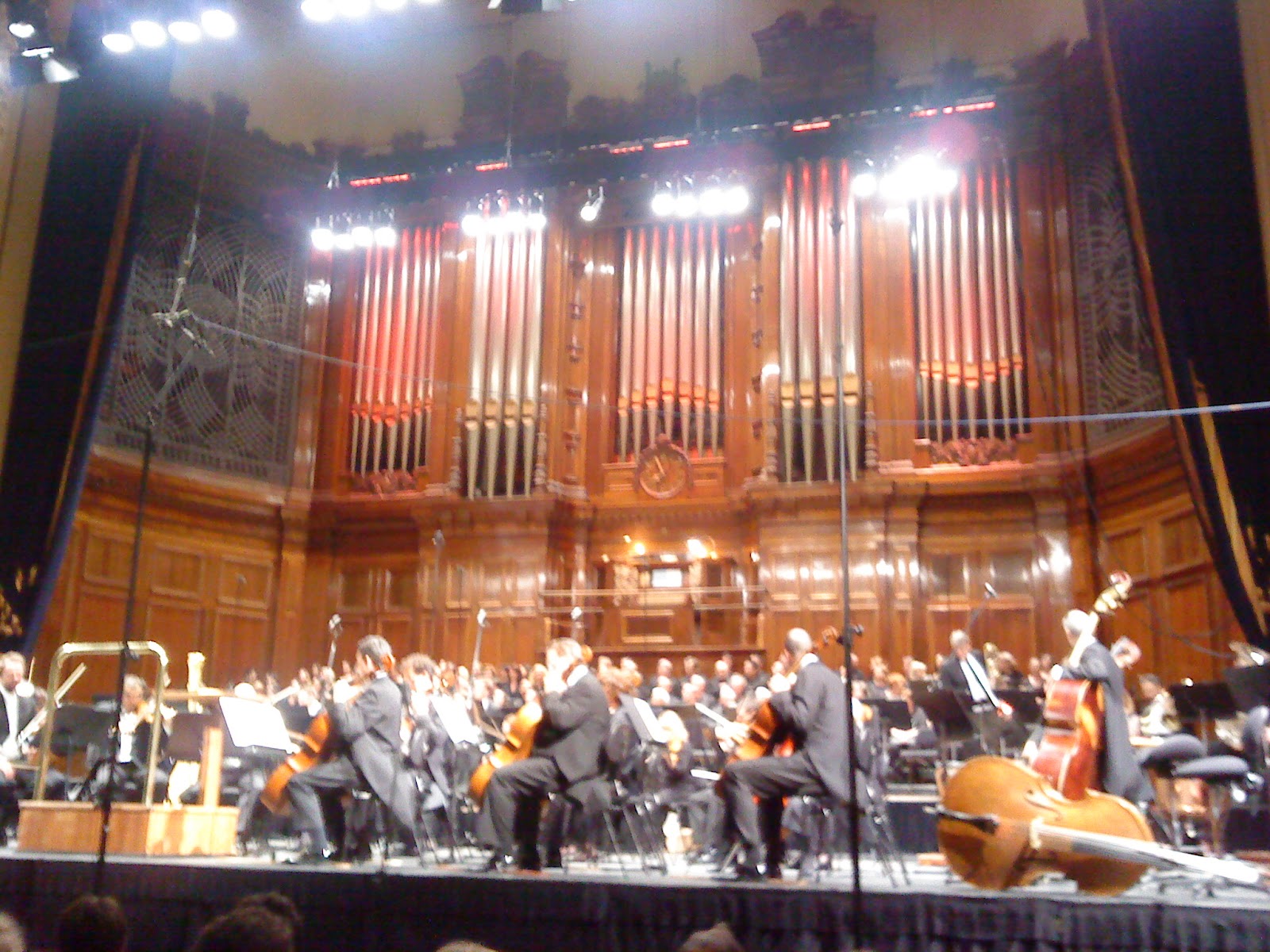
The Melbourne Town Hall is one of Melbourne's beloved icons, as is its grand concert organ. There was seating on the ground floor as well as on the balconies and the orchestra and chorus were seated on the stage. The chairs were surprisingly comfortable, with a goodly amount of padding and good back support, so I did not experience my customary amount of squirming when having to sit still in an uncomfortable seat for a long period. My only complaint would be that the chairs were bolted together with an inadequate amount of space for moderately sized people to sit 'shoulder to shoulder', so a certain amount of squirming became inevitable to avoid personal space encroachment! The cardinal red livery of the attendants was spectacularly attractive, and you really felt as if you were attending an event of importance. The men of the orchestra were wearing tails and (mostly) shiny black patent leather shoes, and the ladies were dressed in black.

Once I read the concert program (another surprise - this was free of charge and also available through the MSO website), I realised that the program choices had quite cleverly been put together. All three of the composers were contemporaries and it appears that Lambert and Walton had friends and muses in common through the Sitwell family. The program notes are truly excellent and well worth reading.

Britten's piece is based around a theme from the music of Henry Purcell (which should be well-known to most choristers and church-goers). The opening with the full orchestra was almost visceral, and generated strong emotions within me. A very large orchestra was assembled on stage, including six double-basses, and it was a joy to see and hear in a three-dimensional space the way that the theme was passed from section to section and the differing timbres of the instruments. At one point you cn almost hear a hornpipe being played, and yes, the theme is the Hornpipe from a suite composed by Purcell for the play Abdelazar (but also taken up elsewhere). The work concludes with a fugue and a powerful climax involving the full orchestra. Tovey's conducting was very animated and demonstrative, and at one stage he did a Napoleonic impersonation with one hand tucked into his jacket!

I do not recall having heard the Lambert piece before, and it very much reminded me of a film score, and at one stage it was highly reminiscent of the introduction to John William's "Star Wars" theme, and you almost expected to see Darth Vader stride onto the stage! There are plenty of jazz and blues references, and the piano part was very ably played by Tovey alongside his conducting. There was surprisingly little work for the mezzo-soprano soloist. Deborah Humble looked resplendent in a full-length gold lame gown and acquitted herself well vocally.

The highlight of the concert was Walton's "Belshazzar's Feast". The chorus was well-drilled with clear enunciation but was drowned out at times by the orchestra. Jonathan Lemalu was impressive, with a powerful voice and presence, and you could actually physically feel the vibrations from his voice. Tovey's conducting was frequently frenetic, and it did appear (from behind) to be difficult to follow his beat, but my choir colleague later explained that he adopts a technique of conducting by entry and line rather than globally. In any event, the orchestra and choir had it all worked out and combined to produce an excellent synergistic result. The string playing was tightly coordinated, both visually and aurally. The dramatic climax involved brass players on both balconies and the organist bringing the full power of the organ to bear on the final chord, after patiently waiting for what must have seemed like an eternity!

The enthusiastic applause of the audience went on for quite some time, reflecting the quality of the performances that had been delivered.

It was a marvellous concert, and I came away feeling both energised and entertained in the best possible way. There is no doubt that listening to a recording is no substitute for hearing and seeing an orchestra and chorus 'in the flesh', and I felt privileged to be there. If all the MSO's other offerings are of an equally high standard then Melbourne has a lot to be proud of.

Should we support live music at all levels? Absolutely! I love being a performer myself and it always gives you a 'warm inner glow' to have an appreciative audience after you know that you have given your best. Many academic papers have been written on the benefits of choral singing for good health (including both the immune system and mentally) and on the 'Mozart effect' for improving performance. Ironically as a performer I can find it hard to sit and listen to others as I would rather be 'doing', but with this concert it was a pleasure to sit transfixed and enjoy a sublime experience.

The Friday night concert was recorded and is available for streaming on the MSO website and will be broadcast on ABC Classic FM.

Not something you see every day on the way home on the train - a life-size teddy bear!

Pop Restaurant doesn't quite go off with a bang!

Pop Restaurant on Urbanspoon
http://www.poprestaurant.com.au/
Group Function upstairs
Lunch, Sunday 3 June 2012


My choir was recently shouted to a finger food lunch at this restaurant as a 'thank you' for its efforts over the course of the year.

The function was held in a spacious upstairs room, which has an oriental flavour with red lanterns hanging from the ceiling and dark wood panelling. There are padded benches around two walls of the room, and comfy dark brown club lounges and chairs in the remainder of the room with red also being a theme with the loose cushions. There was some light jazz playing in the background when we arrived, but this was turned off in the interests of conversation.

Arrangements had been made to supply wine, beer and soft drink to the attendees, and having a strict "don't drink and drive" policy I stuck to the orange juice, so this review relates to the finger food.

The food was brought around on white porcelain trays by two young waiters - a personable Irishman and a less communicative Frenchman. Distribution was a bit patchy, and as I was sitting with a group in the furthest corner of the room we did miss out to some extent.

1. Thin toasted 'French' bread with a slice of thinly cut rare beef and a caper on top.

2. What was described as "tortillas": a stack of very bland compressed tortilla and potato with a foodpick through the centre and a small piece of red capsicum on top. Not very popular.

3. Grilled chicken on skewers with a tasty chilli and coriander dipping sauce. These were very nice.

4. Deep fried zucchini and goats cheese nuggets. I felt that the flavour of these didn't quite work in terms of the two components complementing each other. The zucchini tended to overpower the other more subtle flavour.

5. Deep fried breadcrumb-coated baby red capsicum stuffed with goats cheese. These were nice and also very popular.

6. Baby meatballs served in a pot with tomato ragout and accompanying pieces of lightly toasted sour dough bread. The meatballs were a little bland and really rather tricky to eat with the toast (being the challenge of successfully attaching a round ball to a flat object for long enough to place it in your mouth!).

7. Long spiky and thin fillets of fish deep fried in a fluffy golden batter and a white aioli or spicy Moroccan dipping sauce. The fish was quite delicious, and this one was also very popular.

Some people managed to get tea, coffee or hot chocolate, but not all of us received the offer, which was a bit disappointing.

Although I like the occasional serve of fish and chips, I am not otherwise a great fan of deep-fried food, and felt that the choices offered did not have enough variety in terms of light and fresh food. There was a lot of protein (meat, chicken, fish, cheese) without much foil by way of vegetables and fruit. It was also a pity that the way that the chicken and fish was presented meant that people could only take a very small amount of the dipping sauce in order to avoid cross-contamination.

Everyone did have a good afternoon in terms of socialising, and by and large found something to enjoy amongst the food on offer, but it was a pity that the service was not more evenly distributed.

It was clear that the food was freshly prepared, which was a plus, and one thing I cannot say is whether the menu choices were determined by the organisers or the chef of the day.

Apart from the failure of the 'tortillas' to excite and the logistical challenges of consuming the meatballs, the preparation and quality of the food was of an acceptable standard, as was the venue.

One can only conclude that it is possible to run a successful function in this setting, but it would be worth devoting some time and effort into ensuring that the menu is a bit more varied and capable of being enjoyed (and easily eaten) by all.

Tuesday, June 5, 2012

Infuse Restaurant, Hemisphere Conference Centre & Hotel

Infuse Restaurant
Hemisphere Conference Centre and Hotel
488 South Road
Moorabbin Vic 3189
Tel: (03) 9209 5959
www.hemisphere.com.au
http://www.hemisphere.com.au/melbourne-culinary.html
Menus:  http://www.hemisphere.com.au/catering-menus.html
Group dinner, Wednesday 30 May 2012

I dined in the Hemisphere restaurant with a group of colleagues after a training workshop which was being held at the venue. We had two tables of around eight people, seated in the back of the restaurant. We were served by a charming and attentive young waitress, and it transpired that she was training towards the same vocation as the majority of the persons present!

Only one person on our table had an entree, so I will concentrate on the main courses and desserts. There was a bit of a wait for the food to come, but all the dishes ordered for each course were delivered efficiently at much the same time. We also had some of the garlic bread ($5.00). The presentation of this was a little puzzling - thick slabs of triangular-cut white bread with a tasty enough melted garlic, butter and parsley topping. There was so much bread in comparison to the topping that it would have been impossible not to fill up on bread if you had more than one slice, so most of it went uneaten.

Two people at our table had the "Three cheese ravioli served with a medley of wild mushrooms in a creamy sauce, finished with wild rocket ($21.50)". I am told that this was nice. Two others had steaks, served with homemade chunky chips and seasonal vegetables ($27.50 to $36.00). Neither steak was cooked as the person had ordered, with the result that they swapped! I had the "Whole baked baby barramundi filled with pickled ginger, chilli and spring onions, served with wok tossed broccoli and shitake mushrooms in a soy and ginger reduction" ($26.50). This was pretty much as described. The fish had been de-boned internally and stuffed. However, the flavour of the stuffing and the reduction was overly astringent, and I did not enjoy it. My colleagues had ordered for the table side dishes ($6.00) of shoe string chips, buttered seasonal vegetables and garden salad with red wine and seeded mustard viniagrette. The latter two appeared fresh (and the vegetables tasted fresh if a little bland), and since I am not a fan of chips, especially shoe-string, I did not try these.

The desserts appeared to be more successful on the whole. Other people at our table tried (no complaints heard!) the "Warm compote of rhubarb and vanilla bean with ice cream" ($9.50) and the "Seasonal fruit platter with fruit sorbet" ($10.50) and I had the "Dark chocolate cake served with macerated berries and cream" ($9.50). This was beautifully presented and was the star of the evening for me. The cake was dense but moist, and the berries and sauce had a tangy tension between tartness and sweetness.


I also ordered a cappuccino as I had a long drive home. This was surprisingly good and I did enjoy it. It was obviously freshly made, with a rich dark bitter flavour which 'packed a punch', and just the right amount of froth on top. Definitely recommended!

In a venue such as this where a high volume of food may need to be served in a short time, there is going to be 'formulaic' preparation and cooking, but our experience suggests that there are some gems to be found if you choose wisely ...

Infuse Restaurant on Urbanspoon

Well-travelled teddy bears

(Updated 5 October 2012 - new photos added.)

Last year a friend kindly gave me a Florence Nightingale teddy bear from the Great British Teddy Bear Company (http://www.gbteddybear.com/) as a gift. Since then a number of other bears from their collection have also been gifted and travelled 'Down Under'. They are a family-run company, ship anywhere in the world and provide excellent service. There are lots more quirky bears where these came from!

The 2012 Victorian Cancer Council fundraising bear is also featured at the end of this posting.

Florence Nightingale and her medical and nursing colleagues

Roger from the Royal Airforce Bomber Command networks with an astronaut

St George, Protector and Friend of dragons!

Carl Gustav, a handsome Royal Navy Bear, enjoys a get-together with some of his colleagues who also serve the community.


Algernon, a City Gent, had a spiffing time at the London Olympics and is seen below hobnobbing with royalty.


Elmore (the farmer/gardener bear) is the official 2012 fundraising bear for the Victorian Cancer Council. He is also available in a smaller version. He loves to spend time with his best friend Gracie.


Tuesday, May 29, 2012

Documentary: "Fighting for Life" (Learning to care for those in harm's way)

Last Sunday night an extraordinary documentary screened on the ABC, entitled "Fighting for Life". It was promoted as one of the most powerful anti-war documentaries ever made, and it presented the human cost of war in a moving and compassionate way.

Made in 2006, the documentary covers the work of doctors, nurses and medics caring for injured soldiers on the front line in Iraq and the doctors-in-training at the Uniformed Services University, where they learn the specialised skills required for military medicine - "Learning to care for those in harm's way".

I was particularly struck by one line late in the film which stated that "tens of thousands" of service personnel had sustained war-related injuries. When this occurs in the context of a natural disaster, it is an international tragedy, and when we talk about "mass casualty incidents" in a Western country it is usually tens or at most hundreds of people. Here is the hidden cost of war - vast numbers of (often young) individuals who suffer horrible injuries that may affect them for the rest of their lives and face the daunting challenge of rehabilitation and building a new life quite different to what they had originally envisaged for themselves and their families. We see amazing courage, determination and resilience in survivors and the genuinely good people who care for them.

It suddenly dawns on you that the cost of war is not just the cost of the war machine but the ongoing costs that must be borne by individuals and society as a result of "service above self".

Even though as a doctor I have to confess to being somewhat inured to the the sight of blood and traumatic injuries, I did not feel that the documentary was either excessively gory or excessively voyeristic. It sensitively portrayed real life on the battlefield and its aftermath and could not have been made without the consent and support of the injured soldiers and their families.

I remember as a teenager watching a scene from the film "Doctor Zhivago" where two armies are marching to war and the invisible narrator comments that both sides were "praying to the same God for victory". It is poignant that in this film we see casualties from both sides being cared for by US Army medics.

Documentaries such as "Fighting for Life" remind us that there are no winners in war, and if only humankind could find a better way to solve its conflicts than resorting to guns and violence. The health professionals in the film are dedicated to caring for the fallen soldiers and to helping them rebuild their lives, but you can't help thinking that they harbour a wish that the need for military medicine might just become redundant ...

The documentary is highly recommended and is a fascinating insight into the "bigger picture" of the casualties of war.

Friday, May 25, 2012

Dining with Altitude – Sea to Sky Restaurant, Village Central, Mt Baw Baw Alpine Resort

http://www.mountbawbaw.com.au/winter-baw-baw-info/winter-bars-and-restaurants.html
“Village Central’s Sea to Sky Restaurant offers spectacular views, great food and wine and excellent customer service. Spend the afternoon on the deck and enjoy Gippsland’s fine produce and great local wines.” For bookings call: 03 5165 1123

Opening hours during the Green Season
Monday to Friday: 11am - Late
Saturday and Sunday: 10am - Late

Operating Hours for Winter:
Monday to Thursday: 11am - 4pm
Friday and Saturday: 10am - late
Sunday: 10am - 4pm

Visited for dinner, Saturday 19 May 2012

The cuisine is ‘Modern Australian’ and the menu offers a good variety of dishes despite the somewhat remote location. All the serving sizes for main course and dessert were very generous.

Our group of four started with the homemade garlic bread. This was thickly sliced and soft and slightly sweet with a hint of garlic and sprinkled with parsley and was slightly pan fried to a golden brown with butter on the outside.

Two members of the group tried the tiger prawns with a creamy white vodka sauce, wilted baby spinach, a touch of capsicum on a bed of rice - I am told that this was very nice.

The other two sampled the eye fillet served on a bed of mashed potato with wilted baby spinach, sauteed mushrooms and a hint of capsicum on a rich dark reduced red wine jus. This was very flavoursome.


One of my colleagues tried the chocolate mud cake served with whipped cream and a chocolate ganache. This was reportedly very rich.

Two of us tried the berry and white chocolate gateau, which consisted of alternating layers of piquant red berry sponge and white chocolate served with fresh berries (raspberries and strawberries), a drizzle of sweet berry sauce and whipped cream. This was also very rich and flavoursome. The berry layers were perhaps a little dry when eaten alone on the spoon, but this was well compensated for by the accompaniments. An inspired combination!


The small pots of post-prandial peppermint tea were made with real tea leaves.

Hostess Michelle provided outstanding service with a smile.

Village Central on Urbanspoon

Wednesday, May 23, 2012

Nespresso Grand Crus Coffee

(Updated 19 July 2012: 'Espresso Decaffeinato' added.)
(Updated 15 June 2012: 'Ristretto' and a new photo added.)
(Updated 8 February 2013 - brief paragraph at end of posting re the Nescafe Dolce Gusto system.)

These little coffee disks are designed to be used in a Nespresso coffee machine, and are a little like the TARDIS – there is a great deal packed inside. The powder is tightly compressed, and there is a generous serve per cup of ground coffee.


Perhaps the approach was a little unorthodox, as the disks are designed to be used in commercial machine, but as access was not easily available, an old-fashioned technique was used. The aroma of each coffee was sampled on opening the disk and then brewed in a single-serve coffee plunger and tasted first black without any additives.

(To spice up your life a bit, you can also "mix and match" disks and create your own funky coffee blends if using a plunger! This idea proudly brought to you by "The Mad Scientist": http://themadscientistcooks.blogspot.com.au/)

LUNGO
Lungo Leggero (Intensity: 2)
This has a smooth, warm and rich aroma which is immediately comforting. Once brewed the flavour is nutty and soft but full-bodied and develops in the mouth without leaving a strong aftertaste. A pleasant subtle cup of coffee.

Lungo Forte (Intensity: 4)
The aroma is soft and sweet with a slight fruity tang. It takes a moment for the flavour to develop on the palate, but it is rich and dark and a little tangy without being overpowering with a mellow aftertaste which leaves a slight tingle on the tongue. The subtleties of the taste are less obvious when milk is added, but there was still a zingy aftertaste.

ESPRESSO
Espresso Leggero (Intensity: 6)
This has a more forthright roasted aroma that once again has a slight sweetness to it, almost like the tempting smell of roasted vegetables in the oven. It makes me think of roast pumpkin! The liquid form packs a punch – robust, full and flavoursome. The lingering aftertaste is smooth and a little smoky. With milk added it makes a strong but well-rounded cup of coffee.

Espresso Forte (Intensity: 7)
There is a strong and soothing aroma of “just right” roasted beans. It is pungent but darkly inviting. Once brewed the flavour is strong and complex with a hint of bitterness and a slowly subsiding forthright aftertaste which leaves a slight tingle on the tongue. When milk is added, it has a silky strong and somewhat smoky taste. I did enjoy this one (as I like strong coffee) but it this is probably the demarcation point in the Nespresso range between those who like their coffee “black and strong” and those who enjoy a milder brew.

Espresso Decaffeinato (Intensity: 7)
Firstly, I have to say that it has a gorgeous aroma – rich and darkly roasted. This is no wimpy coffee. Drunk black it has a dense and dark slightly bitter flavor worthy of its Espresso nomenclature with a rising aftertaste which hangs around and makes its presence felt, with a bit if a tingle in the tail. With milk added it still ‘packs a punch’ and you truly would not know that you are drinking a decaf. If you want the sensual experience of drinking coffee without the accompanying palpitations and insomnia, then this is a very good choice. Recommended!

RISTRETTO
Ristretto (Intensity: 9)
The initial aroma is fresh and spicy yet dark and complex, making you think of enjoying an exotic beverage seated in a comfy leather chair around an open fire surrounded by a deep old forest. Like its sibling, this coffee is strong and not for the faint-hearted, but has a beautiful smoky and smooth depth of flavour with perhaps an echo of peppermint. It has a lovely cleansing sensation when rolled in the mouth, and a confident aftertaste which seems to intensify slightly over time, leaving a ‘tingle’ on the tongue. It is quite delicious drunk black, but its zesty and smoky nature remains when milk is added. An excellent cup of coffee!

Ristretto Origin India (Intensity: 10)
This coffee has a powerful aroma which is smooth, luscious and rich with a hint of dark chocolate. On drinking it has a ‘WOW’ factor! It is strong and quite smoky with a good depth of flavour, and on savouring the taste in the mouth a bitter underlay emerges. There is a forthright aftertaste with a definite ‘tingle’. It is surprisingly milder with milk added, but the underlying strong bitter character shines through. I enjoyed it, but due to its intensity perhaps one for the aficionados or the caffeine deprived!

These are all good coffees, and a good range of flavours depending on your taste or current need for re-caffeination! I would recommend them all – enjoy!

A couple of months ago I had the opportunity to try a cup of coffee from the Nescafe Dolce Gusto machine and system during an in-store demonstration at Harvey Norman. This system offers 16 different types of hot beverages and also provides the milk in a separate capsule. The cappuccino tasted nice (if a bit bland for my taste) and was served hot. This is probably a reasonable choice if you like to be able to serve a variety of different types of coffee (hot chocolate, teas) and not have to worry about frothing your own milk.

Tuesday, May 22, 2012

Vocational competencies for ski patrollers

Prior to 2011, the accepted standard of first aid training for ski patrollers in Australia was the Australian Ski Patrol Association's Advanced Emergency Care Course. This is held annually at various locations around Australia (Victoria, NSW, Tasmania) and active ski patrollers must recertify every three years. Passing the course involves successful completion of both written and scenario-based assessments. Most resorts also conduct additional resort-based training on an annual basis, and in some cases successful completion of practical assessments is also necessary in order to continue working as a patroller at that resort. Some competencies must be completed on an annual basis e.g., CPR and defibrillator, Oxygen, Penthrane and Entonox.

Mt Baw Baw (http://www.mountbawbaw.com.au/) is one of the smaller Victorian resorts and does not have onsite medical and ambulance services, so there is normally a lengthy wait for ambulance attendance and ski patrollers must care for casualties for extended periods. During 2011 Mt Baw Baw Alpine Resort took the decision to break new ground and introduce vocational competencies for its ski patrollers as a risk management strategy. This proved to be somewhat controversial and some resignations of patrollers occurred as a result. In essence, the assessments involved a written first aid theory paper, a written paper covering resort-specific operational procedures and two practical scenario-based assessments, one for a conscious casualty and the other for a casualty with an altered conscious state. All the scenarios were based on events which actually occurred at Mt Baw Baw and thus were extremely realistic. Different assessment schema have been trialled over the two seasons: intially "competent/not yet competent" and currently score-based. Candidates will be given a summary scoring sheet, and feedback will be given by a resort representative.

An additional innovation for 2012 was a training day based around small-group work in the areas of Approach to the Casualty: Incident Evaluation, Primary, Vital Signs and Secondary Surveys, History Taking; Glasgow Coma Scale; and Hygiene. This was very successful.

The Mt Baw Baw Medical (First Aid) Centre:


WARNING - Do not buy from DinoDirect!

This is a warning not to buy goods online from DinoDirect (who are based offshore) and also to be very cautious about buying any electronic devices via a deals voucher unless the supplier of the goods is based in your home country.

Late last year I bought a NextBook Premium7 Android tablet via a Spreets voucher for a friend. This is a 7 inch Android tablet, which is supposed to be able to do all the normal things that a tablet can do. However, from the time it was purchased there were problems with it. The battery only retained its charge for a very short time, regardless of whether it was being used or not, and using a finger for screen scrolling only worked erratically and generally not at all if the screen image was enlarged, such as if you were trying to read emails through a browser. However, the most significant problem is that it has never been possible to get the inbuilt email program working. At first I thought that perhaps this was due to an inadequate WiFi connection when I tried it at both the local library and at work. I carefully researched the correct connection parameters from Google for Gmail in case that was the problem. Eventually I was able to try setting it up with a direct ADSL connection, and it still would not work. I then emailed NextBook customer service, and they first suggested resetting the email program (which did not work) and then resetting the tablet to return it to its default settings (which also did not work). NextBook told me that it was covered by a one year manufacturer's warranty, but that if I wanted to return it to them I would have to obtain a US shipping address and return the tablet to them in the US, which would be prohibitively expensive. 

By this stage (early April 2012) I had "had enough" and contacted Spreets to ask for a return and refund in accordance with Australian consumer law (http://www.accc.gov.au/content/index.phtml/itemId/1023610). They cheerily referred me on to DinoDirect. I provided DinoDirect with a copy of the purchase documentation, the full background story, photographs to show that the emails were not loading and that the battery was running out quickly and a statement that the goods were faulty and did not do what they were represented to do and were not fit for purpose and that I was asking for a return (at no cost to me as the tablet was under warranty) and refund as provided for in the consumer law. DinoDirect eventually replied offering me a US$50 credit voucher that I could spend in their online store towards another tablet.

As the tablet is so faulty as to be of no use to me or anyone else, I wrote back restating my rights and their obligations under Australian law, and their reply basically said if you want a refund you will have to send the tablet back to us at your own cost, but since that will be expensive perhaps you just want to take the $50! I then contacted Spreets to say that since they were the Australian-based seller that I initially contracted with, they also had responsibilities to comply with Australian consumer law. They just referred my complaint on to DinoDirect again and said to expect a further reply. I am still waiting nearly two weeks later!

In summary:
  • DO NOT buy from DinoDirect as they have just thumbed their noses at Australian consumer law and ignored the warranty attached to the tablet. 
  • DO NOT buy any electronic gadgets via a deals voucher unless you can be sure that the supplier of the goods is based in your home country and you will be able to exercise your rights under the warranty and local consumer law.
Update as at 6 July 2012:
After more correspondence with Spreets after not hearing anything back and then being referred to DinoDirect again and not hearing anything back, I decided to write to Spreets one final time saying that I held them responsible for ensuring that a solution was reached and that if this did not happen I would be reporting the matter to Fair Trading Victoria and the Australian Competition and Consumer Commission for breaches of the Australian consumer law. Fortunately Spreets took this seriously and undertook to contact DinoDirect again and then got back to me to say that if I did not hear anything within a few days to contact them again.

Within a few days I received a telephone call from DinoDirect (in China) offering to accept a return of the unit and to pay for the postage. This was followed up by an email confirming the offer and providing instructions for returning the unit. I have packaged it up and posted it today (the cheapest cost including a tracking number was A$31.50) and will hope that they are true to their word and provide a refund of all costs once they receive the package. It will be interesting to see how they arrange this as it was originally paid for by credit card through Spreets. I will post a final update once the outcome is clear, but I think for any consumer of electronic goods the summary advice above still stands - it is just too problematic buying from an overseas supplier without local agents if you run into problems.
Update as at 10 August 2012:
I had to follow up with DinoDirect to see if they had received the package and they are now refusing to provide a refund, just a replacement, citing an expired warranty period (patently incorrect) and the :group purchase arrangements". They have gone back on their previous verbal and written agreement to refund the purchase price plus shipping and seem not to care in the slightest about being in breach of Australian consumer law. So, I have gone back to Spreets again asking them to sort it out and get DinoDirect to pay them money to them so that I can get a refund from Spreets. We will see what happens, but this only reinforces the advice in the summary above - give DinoDirect a wide berth!!

Update as at 30 August 2012:
After further pressure from Spreets and prevarication on the part of DinoDirect (claiming to have been in contact with me, claiming to have paid the money, etc.) a refund payment was finally made yesterday through PayPal. However, I was dismayed to discover that the payment had been made in such a way that I was being treated as if I was a seller and fees had been deducted by PayPal, leaving me around A$7 out-of-pocket! After contacting Spreets again they kindly offered to sort things out by providing me with a Spreets voucher for the $7 which I could use at a future time. Given the long and tortuous nature of this matter, it seemed the best solution rather than trying to chase DinoDirect for the extra money. As a result I cannot say anything good about dealing with DinoDirect and the reservations above remain - caveat emptor! ('buyer beware!') in any dealings with them.

Monday, May 14, 2012

Maria Lovisa Ã…rberg (1801-1881)

As part of my Swedish language studies last year, we were required to give an oral presentation about a famous Swedish woman. After doing a bit of online research, I settled on Maria Lovisa Ã…rberg (1801-1881), thought to be the first woman formally practising medicine (and surgery) in Sweden. Hers is a fascinating story, which can be appreciated in English through this Wikipedia article:
http://en.wikipedia.org/wiki/Lovisa_%C3%85hrberg

However, for those who can read Swedish, here is the link to my Powerpoint presentation about Maria Lovisa Ã…rberg. I must thank some wonderful Swedish friends for proof-reading the presentation and providing valuable feedback which turned the finished product into something which the Swedish teacher said she could not fault grammatically!
http://dl.dropbox.com/u/30234302/Maria%20Lovisa%20%C3%85rberg%20%281801-1881%29.ppt

Sunday, May 13, 2012

Scandinavian Crime Fiction Book Review: The Ice Princess by Camilla Läckberg

Several years ago a dear Swedish friend of mine gave me a copy of this book in Swedish when departing home after six months of working in Australia. I never did get around to reading more than just a few pages, but a couple of months ago iTunes offered a special deal on selected Scandinavian crime fiction offerings, and I decided to buy the book in English.

The title refers to Alexandra, a beautiful (and secretly pregnant) woman who is found dead with her wrists slashed in a bathtub in the middle of winter in a Swedish seaside town. The tortured alcoholic artist for whom she was a muse likens her dead body to an “ice princess”. Each chapter of the book starts with an elegiac preface from the perspective of this man who hovers between creation and self-destruction. He is at one stage wrongly accused of the murder and is later found dead himself; it is initially speculated at the hands of the same killer but this turns out to be another twist in the tale.

This book does not have chapters in the traditional sense, as they are small in number and some are frustratingly long, especially when you are thinking “I will just finish this chapter before turning the light out and going to sleep”. The first chapter was long and contains frenetic character and scene changes. There is an introduction to many protagonists, some named, some not, and one has the feeling that all these people will in some way be important to the resolution of the storyline. It appears to be a story about secrets, and piecing together the tale that the dead cannot tell.

The second chapter was not so long but continued ‘setting the scene’ and introduced a couple more less likeable characters and a twenty-five year old mystery disappearance of the scion of a local wealthy industrial family, which somehow seems linked to the murder. In the next three chapters we see a darker side to some of the characters as well as a blossoming romance between the heroine Erica and Patrik, one of the detectives investigating the case. The intensity of grief of the cuckolded husband seems to rule him out and the artist is exonerated, but we begin to wonder about various other males that we have been introduced to, including Erica’s abusive and manipulative brother-in-law, her ex-boyfriend Dan and the adoptive brother of the missing scion. Secrets concerning these three men are gradually revealed. There is a strained relationship between the the widow of the industrialist and mother of the dead artist, the widow’s former maid. A mysterious relationship is also revealed between the widow and Julia, the plain sister of the dead woman. Minor characters come and go, some more beguiling than others, including Patrik’s colleague Annika, and Dan’s wife Pernilla is seen to possess unsettling wrathful qualities.

The author hints that relevant clues are being collected by Erica and Patrik, but ‘the big picture’ is not yet clear. There is concern raised about the possibility of harm to Erica if she keeps digging into the matter, but dig she will as she has been commissioned to write a biography about the deceased woman.

Although it would be unsporting to reveal the denouement of the book, all the loose ends are wrapped up in the final sixty pages or so. Patrik, Erica and her sister Anna and her children all have a shot at future happiness. A deep and dark complicity between five of the main characters is revealed along with the truth about the shadows hanging over Alexandra. Surprising secrets are revealed concerning Julia and the identity and motive of the killer. To my great relief, the heroine was not threatened with any harm and thus there were no implausible escapes (such as in Stieg Larsson’s “The Girl Who Played With Fire”).

Unlike television shows, which typically have an “A” story and a “B’ story in each episode, crime writers seem to delight in packing in as many different convoluted story lines as possible. This book is no exception. It is cleverly done, and enough detail is withheld to keep you guessing until the very end. It would not win a Pulitzer prize for fiction, but is a pleasant enough diversion despite its erratic organisation and perhaps a little too much space devoted to vignettes of peripheral characters.

Verdict: Recommended

Wednesday, May 9, 2012

On Death and Dying – Healing at the End of Life

Last Saturday I attended an excellent seminar on palliative care conducted by the Cognitive Institute (www.cognitiveinstitute.org) conducted on behalf of MIPS, a medical indemnity organisation which I belong to (www.mips.com.au).

The attendees were a mixture of general practitioners, specialists, hospital medical officers and medical educators, and the very open discussions between participants and the facilitator (who is an experienced GP) were very valuable.

It was very interesting to discuss the impact of culture on the approach to death. The human race has a 100% mortality rate, but we heard about a range of cultural approaches ranging from family shielding the patient from the knowledge of impending death to accepting death as a normal part of life. As in every other important area of life, preparation makes a difference- for the patient, for loved ones and for the health practitioners advising and providing care.

In contrast, just a few days previously, I had cause to reflect on how sudden and unexpected death can be.

On Thursday last week I was sitting at the kitchen table working when I became aware of the sound of a persistent helicopter buzzing overhead. Most commonly this occurs when there is a Police helicopter in the area (as I remember when I was living close to the Hoddle Street shootings many years ago), but when I went outside and looked it was a Channel 7 News helicopter. I therefore surmised that something significant must have happened in the immediate vicinity and started to find out what it might be. I started to search news sites on the Web, turned the TV on for news updates, and then turned on the ABC radio.

Normal radio programming was interrupted to bring the sobering news of a fatal fiery car crash in drizzy overcast conditions just a couple of hundred metres down the road. Three people (and perhaps a fourth) had been instantly incinerated with no hope of escape.

In these situations it is very much a case that, as poet John Donne once famously said, “no man is an island entire of itself”, and when it is something terrible that has happened in your local area, one feels an incredible need to understand what has happened and exactly where it has happened. It is not a form of ghoulish voyeurism, but rather a sense of being part of the local community and sharing in the shock and grief and sorrow for those who lost their lives and their families and friends.

So, I went for a walk in the light drizzle towards where I understood the accident to have happened. The Police had both distant and close roadblocks in place, and it was obvious that a lot of emergency responders were hard at work. I wasn’t interested in getting too close, but just to clarify the location where the accident had happened, and from the corner of a small nearby park could see the burnt out rear end of a car covered by a blue tarpaulin resting against a residential fence, diagonally opposite the suburban railway station. The Police said later that it was just a horrible freak accident where a chain of circumstances had culminated in the tragic outcome. If you have ever heard of the ‘Swiss Cheese Model’ which is used in human factors theory to explain how adverse events happen, then this was a perfect example. Just so profoundly sad!

It did make me slightly anxious about driving that evening in the same drizzly conditions, and the information that has been provided about the crash analysis goes to reinforce the point that in wet overcast conditions all drivers should slow down, drive carefully and not take any risks.

The Age Newspaper, 3 May 2012: http://www.theage.com.au/victoria/police-fear-fourth-body-20120503-1y0zs.html

The Age Newspaper, 4 May 2012: http://www.theage.com.au/victoria/fishtail-link-in-fiery-triplefatal-car-crash-20120504-1y2w7.html

Monday, May 7, 2012

Surprisingly good ice-cream from Coles!

(Updated 15 June 2012: Strawberry White Choc added; 23 June 2012: Photos added. Updated 24 December 2012: Lamington Style added. Updated 28 January 2013: Mango Swirl added Updated 01 November 2014: Coconut Lime and Chocolate Orange added.)

Coles Supermarkets recently introduced a range of premium one litre ice-creams. Now, I'm not a big ice-cream eater, but in the noble tradition of the Scandinavians, who love their ice-cream even in winter, I decided to try out a few flavours despite the somewhat chilly time of year and was pleasantly surprised at just how good they are! All the ice-creams are made with real cream.

Verdict: Recommended

Rum and Raisin
The ice-cream is a light butterscotch colour, and has a smooth creamy taste with a definite sharp flavour of rum. It contains plump and juicy raisins which are similarly rum-soaked in flavour.


Rocky Road
This has a solid chocolately background which is not overly sweet, with crunchy nuts and pieces of soft springy pink and white marshmallow as well as some raspberry swirl.


Chocolate Fudge
This one has a denser dark chocolate base with syrupy swirls of fudge and chewy chocolate pieces.


Strawberry White Choc
This ice-cream has a fresh, smooth, sweet and creamy strawberry flavour that bursts out in your mouth like a sunny spring day. There are delicate slivers of white chocolate which amplify the richness of the tasting experience, chunks of real strawberries and tendrils of raspberry swirl, adding small bombs of zesty tang.


Lamington Style Ice-Cream
Indulgent chocolate ice-cream with rich raspberry, swirled with creamy vanilla ice-cream and dessicated coconut.


Well, this is an interesting take on an Australian classic, and it took me a while to be persuaded to try it (really only until it came down to $5.00 a carton, along with the remaining ice-creams in the Coles range).

It is indeed very chocolately in appearance but mild in flavour, with a variegated appearance; presumably the mix of chocolate and vanilla mentioned above. There are occasional flecks of raspberry flavour and quite chewy pieces of dessicated coconut (in a semi-frozen state).

To my mind it is a brave experiment that doesn't quite work. The chocolate is a bit wimpy, the rapsberry insufficiently prevalent, and the coconut just sits there and doesn't do anything - its normal sweet, succulent, juicy nature is missing, as is the classic offset of the golden sponge base. It is probably inoffensive enough and sweet enough to be wildly popular with children, but I would advise adults to choose one of the more sophisticated flavours previously reviewed.

Mango Swirl
Smooth and creamy vanilla ice-cream accompanied by sassy and tangy mango sorbet swirls with real mango flavour.


Coconut Lime
All those of you who are fans of the individual 'Lime Splice' ice-creams will like this one. It has a base of creamy vanilla ice-cream mixed in with generous strands of shredded coconut and pockets of pale green zesty lime flavour. All these elements combine for a refreshing taste.

Chocolate Orange
All who are fans of the famous 'Terry's Chocolate Orange' will like this ice-cream version. There is a nice creamy chocolatey taste with an overlay of orange essence. It is not too rich and the citrus element is not too overpowering. A nice combination and good as a special treat!

Moreish coffee from Timor-Leste

Coffee Mio Timor-Leste Blend
Verdict: Recommended

The Friends of Baucau, a support group for the Baucau region of Timor-Leste, import a fair trade organic coffee blend as a fundraising measure.

The beans are ground and packaged by Coffee Mio into 250g bags, which are available at selected City of Darebin and City of Yarra customer service centres. For further information refer to the Friends of Baucau website: http://friendsofbaucau.org/get-involved/buy-coffee/

The ground coffee is highly aromatic, with a strong, nutty smell which almost has a hint of the rainforest about it.

Once brewed the flavour is strong, robust and unapologetic. There is a good depth of flavour, with a sustained bitter and nutty underlying character which develops into a lingering aftertaste leaving a tingle on the tongue. This is a coffee which can be savoured rather than sculled.

If I had to think about the mental image that drinking the coffee conjurs up when I close my eyes, it would be the sort of coffee you would brew over an open fire in a rustic log cabin and enjoy drinking with friends.

Apple refuses to bite ...

Late last year I decided to buy an Apple iPad "Smart Cover" as a Christmas gift, and as it was a little difficult to find time to shop in person, I looked online. I found an Australian company specialising in computer cases and accessories which was offering what appeared to be a genuine Smart Cover at a good price, so I ordered one. Once it arrived I became suspicious that it was in fact a counterfeit product, especially when I compared it with a friend's genuine Smart Cover.

Having been a lawyer in a previous life, I did not wish to support products which were an example of "passing off" and exploiting Apple's industrial and intellectual property, and contacted the retailer via email to ask for either an exchange for a genuine cover or a refund. After several emails there was no reply, so I thought that I had given them a fair chance to avoid reporting of the matter and then approached Apple offering to provide it with details of the seller and send them the actual counterfeit product and packaging. I made two different submissions through the Apple website, and after I did not hear anything back I also went to some trouble to get the email contact details of a person within Apple Australia. I wrote to this person twice, also with no response. I was then forced to come to the conclusion that I cared more about protecting Apple's intellectual property than it does and that I was "on my own" in terms of seeking resolution of the matter.

I then renewed my pressure on the retailer, and eventually (after a delay of several months) received a full refund after returning the goods after threatening to report them to the authorities. Since life is too short to follow up every injustice that you come up against, and especially as Apple seemed disinterested in doing anything about the counterfeit accessories, I made a decision not to report the matter to the Australian Competition and Consumer Commission, so in this instance the forgers have "got away with it".

The moral of the story is that if you are concerned about buying a genuine product, be very careful about buying online, and check with the retailer in advance whether the item is in fact genuine or a copy. If you want to be sure, buy from an authorised retailer. Some stores like JB HiFi will offer a small discount on the RRP if you ask for a deal (but Apple does not give them much room to move).

As the old legal saying goes, "caveat emptor" (buyer beware)!

The Cider Stakes

Having bought some Swedish cider from Dan Murphy's last year out of curiosity, a few months later they also had a 'taster' pack of twelve different Australian and international ciders so these have been tried and ranked into (a) worth drinking again and (b) did not impress. 

Five of these are good enough to recommend.
1. Bulmers Original Cider 330mL. 4.7% alcohol. An authentic apple cider. (Australia)
2. Three Oaks Cider Co. - Original Crushed Apple Cider. 330mL. 5.0% alcohol. (Australia)

3. Old Mout Cider. Classic Apple. 330mL. 4.5% alcohol. (New Zealand)
4. Castaway Cider. Apple. 330mL. 5.0% alcohol. (Australia) 


5. Kopparberg Preium Cider with Stawberry and Lime. 330mL. 4.0% alcohol. (Sweden)


The Swedish Kopparberg Lime and Strawberry cider is pinkish in colour and has an interesting taste which is a mixture of tart and sweet, in accordance with its contents. Some may feel it is an alternative version of an 'Alcopop', but it would be a refreshing choice chilled on a hot day. 

Whilst not in the mixed pack, the Swedish Rekorderlig Winter Cider is also pleasant drinking, It can be consumed warm in winter, but is also quite lovely chilled, with a fruity cinnamon-tinged flavour

Fish and Chips - Swimmingly good!

Great Bite
Seafood, Fish & Chips
134A Station Street
Fairfield Vic 3078
Tel: (03) 9481 3790
Visited for dinner, Friday 5 May 2012 and subsequently
Closed on Tuesdays. Open from 11am to 8.30pm other days (9pm Friday).
Verdict: Recommended

This is one of the many fish and chip shops in the local area. Conveniently located in Station Street, Fairfield, it is accessible by car, train (a short walk) and bus (stops right out the front).

They sell fresh seafood as well as the take-away staples of fish and chips, hamburgers, steak sandwiches and souvlaki,

It is a bit of a Friday night treat to have fish and chips (perhaps a hangover from the European or Irish Catholic heritage of many Australians) and Great Bite rarely disappoints.

The Family Pack #2 ($22.00) includes three blue grenadier, three potato cakes, three dim sims and minimum chips. They are willing to substitute three calamari rings for the dim sims if asked (not all fish shops will do this, and have in the past lost my custom as a result).

The serving of chips is a fairly standard size, but the size of the other components is usually generous. The blue grenadier fillets were large, thick and juicy, and like the calamari rings had a wonderful "melt in the mouth" quality with crisp batter on the outside. The potato cakes were also crispy on the outside and soft and melting on the inside. The chips had a similar presentation as well as a light sprinkling of salt, which made them very moreish.

All the pack contents were deep-fried to a dark golden colour, but were definitely not overcooked. All the food disappeared quickly without complaint!

Service is friendly and staff remember 'regulars'. Based on past experience, I would recommend not ordering too close to closing time.

On all visits since the original visit the standard has been consistently good. The fish is always juicy and "melt in the mouth". The recomendation stands!

Great Bite on Urbanspoon