Friday, July 6, 2012

Medical Book Reviews: Jayasinghe ECG Workbook and Robbins Basic Pathology 9th Edition


Elsevier Australia has kindly provided me with inspection copies of the following medical books.

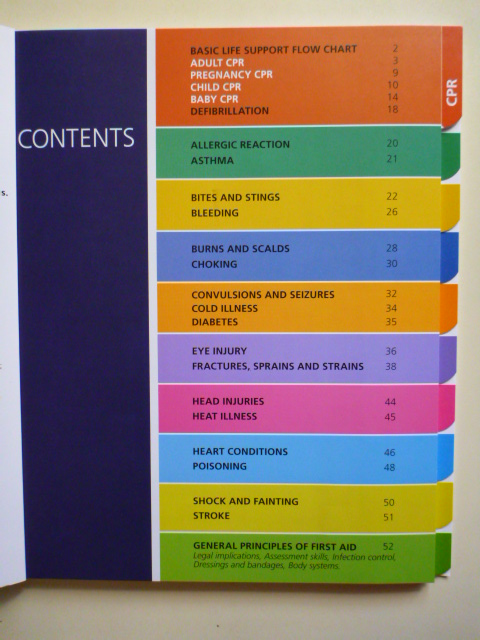
1. ECG Workbook. (Professor) Rohan Jayasinghe.

Churchill Livingstone/Elsevier Australia, 2012. Paperback, 224 pages. RRP $59.95.

For many people ECGs are a bit like "Who's afraid of the big bad wolf”? In reality this includes quite a few of us. In medical school there are people who "just seem to get it" while others continue to struggle, and still "have their L-Plates on" after many years of medical experience.

This refreshing book is aimed at the clinical interpretation of ECGs. It is worthwhile to quote from the Preface written by the author:
“ECG Workbook provides an easy but systematic algorithm to follow when attempting to read an ECG. The exercises are aimed at training the reader to practise this algorithm repeatedly with different ECGs. The real-life clinical synopsis essentially links the ECG findings to the patient’s clinical context. This information guides the reader to make a clinical diagnosis with the help of the ECG findings, and then to decide on the optimal treatment or management plan. … It is hoped that by completing this workbook the reader will gain the required mastery to use ECG as a clinical diagnostic tool effectively and to make suitable management decisions with confidence.”

It is divided into three sections: 1. Basics of the ECG; 2. ECG-based diagnosis: pathology by ECG; and 3. ECGs and pathologies. There is also an Appendix listing the NYHA functional classes, and a detailed Index.

Beginning with Section 1, the pages are cleanly set out, with ample use of coloured headings, colour-shaded boxes for important points and plentiful use of explanatory diagrams. This chapter of 19 pages does indeed cover the basics in a very understandable fashion. It includes the cardiac cycle, the cardiac conduction system, ECG rate, scale and calibration, leads and direction of current travel, determining the cardiac axis and the causes of axis deviation, placement of electrodes and the difference between electrodes and leads, correlation of the leads to the region of the heart, and finally, reading the ECG. This includes a system for doing this together with the parameters of the normal ECG. To compliment rather than insult the author, for those craving a "Dummies' guide to the ECG", this is exactly the sort of thing you are looking for. The chapter is pitched at a good level and easy to follow, and puts the reader in a good position to approach the chapters on pathology that follow.

Section 2 is a chapter of 27 pages. It is set out in the same clean and comprehensive fashion as Section 1. An introduction on reading rate and abnormalities on an ECG is followed by a discussion of various pathologies, starting with different types of tachycardia and their management. Also discussed are bradyarrhythmias and bradycardia, heart block, abnormalities of the cardiac rhythm, normal and abnormal segments of the ECG, ventricular hypertrophy, myocardial infarction and ischaemia, other pathologies with mixed ECG changes, and finally pacemakers. All the common pathologies are discussed as well as some more obscure ones. Section 2 sets up the background for Section 3, which contains the ECG worksheets. After a brief introduction, 45 case studies follow.

The case studies are beautifully set out in two sections each. The first section contains an ECG on the left-hand page and a template for systematic interpretation on the right-hand page, including the various aspects of the ECG, further investigations and management. Before you start to feel that familiar rising sense of panic regarding "but what is the answer?", relax! The second section of each case study includes all the answers, and helps to drill the reader in the recommended approach to systematic interpretation, and helps to build confidence, as your answers can be directly compared to the recommended ones.

Being a paperback of around 250 pages, this book is very portable, and as well as being a workbook is also a handy reference, both in terms of Sections 1 and 2, but also the wide variety of ECGs included in Section 3. It is well-written, accessible and user-friendly. I would certainly recommend it, especially for those who feel a need to improve their ECG skills in a systematic fashion.


2. Robbins Basic Pathology. 9th Edition. Editors: Kumar, Abbas and Aster.

Elsevier Saunders, 2012. Hardback, 928 pages. RRP $103.99

Owners of the book can register it at studentconsult.com, which provides the facility to access the full text online, download images, add notes and bookmarks and to search across all individually owned Student Consult resources online. The online version of the book contains a special additional feature, "Targeted Therapy" boxes (stemming from an understanding of the molecular basis of disease), intended to provide examples of "bench-to-bedside" medicine.

When I was a medical student, our pathology 'Bible' was Robbins Pathologic Basis of Disease by Cotran, Kumar and Collins. I am the proud owner of the sixth edition and its little pocket handbook. This new book is the latest in a trusted and proud lineage. Many of the earlier products are also available via the Elsevier website. Back in those days material available on CD-Rom was considered pretty special and computer-based learning was fairly rudimentary. Since then there has been an explosion of Internet-based resources, and the editors are to be congratulated for "keeping up with the times". In one of the medical student tutorials that I take, students must report back and share with the rest of the class on Fridays the information that they have gleaned concerning the 'learning issues' for the week. Some students will bring their laptops and tablets and read off the screen. Such is the power of learning resources such as the online version of this book - provided there is an internet connection, students and health professionals can access this material wherever they are and use it as a resource in their everyday work.

The book contains 23 chapters over 870 pages, plus a detailed Index at the back. It is visually attractive, with a coloured strip at the top of each page making the chapters easy to distinguish. There is liberal use of coloured headings, diagrams, photographs, tables, orange "Morphology" boxes and blue "Summary" boxes. Even though the text is dense (as is to be expected in any serious medical textbook) the judicious use of colour, illustrations, boxes and space between the various elements makes it appear welcoming and engaging, as opposed to the forbidding nature of many 'old-fashioned' black and white textbooks. Each chapter has a "Chapter Contents" box in its introductory header, listing the key sections and their page numbers. This is a very handy navigation aid. There is also a bibliography at the end of each chapter.

The authors have strived to organise the chapters in such a way that the various groupings of pathologies and organ systems are logical. Some chapters do not have a specific attribution of authorship, whilst many of the chapters are written by other specialist contributors. As we have come to expect, the standard of the content is universally high. Many of the images will be familiar from earlier editions, but there are also many new ones, often showcasing the latest research discoveries.

These are the chapter headings:
1. Cell Injury, Cell Death, and Adaptations
2. Inflammation and Repair
3. Hemodynamic Disorders, Thromboembolism, and Shock
4. Diseases of the Immune System
5. Neoplasia
6. Genetic and Pediatric Diseases
7. Environmental and Nutritional Diseases
8. General Pathology of Infectious Diseases
9. Blood Vessels
10. Heart
11. Hematopoietic and Lymphoid Systems
12. Lung
13. Kidney and Its Collecting System
14. Oral Cavity and Gastrointestinal Tract
15. Liver, Gallbladder, and Biliary Tract
16. Pancreas
17. Male Genital System and Lower Urinary Tract
18. Female Genital System and Breast
19. Endocrine System
20. Bones, Joints, and Soft Tissue Tumours
21. Peripheral Nerves and Muscles
22. Central Nervous System
23. Skin.

In the interests of time and space and maintaining the attention of you the reader, it is probably not wise to attempt to review every single chapter, so I have selected one chapter as an example to demonstrate the general approach to layout and contents and the topicality and prescience of the authors in "walking the talk" as stated in the Preface: "This is an exciting time for students of medicine because the fundamental mechanisms of disease are being unveiled at a breathtaking pace. Pathology is central to understanding the molecular basis of disease, and we have tried to capture the essence of this new knowledge in the ninth edition ... We firmly believe that pathology forms the scientific foundation of medicine, and advances in the basic sciences ultimately help us in understanding diseases in the individual patient."

“Chapter 7: Environmental and Nutritional Diseases” examines diseases which are caused or influenced by environmental factors, including both the external environment and things that humans do to themselves (e.g., diet, drugs and alcohol). After the Introduction, the authors bravely enter into a discussion about the Health Effects of Climate Change and provide scientific evidence for the existence of climate change and list some of the serious consequences which are already occurring. The next key section deals with the Toxicity of Chemical and Physical Agents. This is divided into sub-sections (each with Morphology and Summary boxes) dealing with Environment Pollution - Air, Environmental Pollution - Metals, Effects of Tobacco, Effects of Alcohol, Injury by Therapeutic Drugs and Drugs of Abuse (oestrogens/contraceptives, paracetamol and aspirin; cocaine, heroin, marijuana and a list of "other illicit drugs"), and Injury by Physical Agents (trauma, thermal injury, hyperthermia, hypothermia, electrical injury and ionising radiation). Although one might perhaps argue that more substances could have been included, and more detail included on some of the given topics, a text such as this "cannot be all things to all men" and there are many other excellent references which do provide further information in these areas. However, what is included does serve an important function in "whetting the appetite" and encouraging readers to think beyond the superficial in terms of environmental injuries. The second key section is devoted to Nutritional Diseases and follows the same general layout principles. This covers malnutrition, eating disorders, vitamin deficiencies, obesity (another very topical inclusion) and concludes with short sections on Diet and Systemic Diseases and Diet and Cancer.

One small frustration is that, being an American text, the units of measurement may be different to those used in the Australian context e.g., Fahrenheit for temperature as opposed to Celsius.

The more that I looked at this book, the more that it was like opening a beneficent "Pandora's Box". It draws you in and engages your attention, and like those enraptured of the 'siren song' of old, you don't want to put it down. An odd thing to say about a text book, I know, but much of what the authors present to us about the underlying science of medicine is utterly fascinating. For those who wish that they had paid more attention in medical school, this is your "get out of jail free card", and for those embarking on the journey of learning, it is a marvellous road map. Highly recommended!

Indoor Climbing - Up, up and away!

For a long time I had wanted to try indoor climbing, and I finally had the opportunity earlier this year when Spreets had a special offer for Cliffhanger Climbing Gym in Altona, Melbourne.

I had been a bit of a 'mountain goat' as a child, and have always enjoyed scrambling up the side of hills and mountains, but had only previously had the chance to try climbing twice - once abseiling down the side of a rather steep seaside cliff during an "Expedition Medicine - Mountain Rescue" course in Tasmania in late 2007 and once ice-climbing on Franz Josef Glacier on the South Island of New Zealand in early 2007. I enjoyed both outings. Fortunately I took to it "like a duck to water" and was really invigorated by the experience. As you are working with a 'buddy', with one of you climbing and the other belaying, it is perfectly safe, and as a result there is no need for fear. We started out on the smaller walls, but after doing some of the easier ones, I decided to attempt one of the higher walls, and to my great surprise got right to the top. Since that initial success I have now conquered two of the other walls that go right to the top of the gym, which has been very exciting.

The thing that I love about indoor climbing is that it is an "all absorbing" activity that is both physically and mentally challenging. You are pushing yourself physically, stretching your arms and legs to perform seemingly impossible feats, and all the time problem-solving to work out how you are going to get up the wall - what hand-hold to use, how to transfer your weight, can I reach up there?, etc.

The staff at Cliffhanger have been both helpful and friendly. It is the highest indoor climbing gym in the Southern Hemisphere (20 metres). Highly recommended!

Westgate Sports and Entertainment Complex,
Cnr Grieve Parade and Dohertys Road,
Altona North VIC 3025, Australia
Telephone: 03 9369 6400
For more information see their web site: http://www.cliffhanger.com.au/

Monday, July 2, 2012

Medicine and the Law

Today I attended the first day of the University of Melbourne MD Student Conference at the Melbourne Cricket Ground.

It was great to see quite of few of the students that I have taught last year and this year, and one of my students from last year mentioned that the inclusion of sessions on "Medicine and the Law" in the program this year for the first time had stemmed from our discussions last year and my concerns that not very much was said about medicine and the law in the medical curriculum. If time permits, I may write more about the conference later, but the sessions today reminded me that I was asked to present a paper some years back on my reflections on my career as a lawyer and then a doctor. This is reproduced below.

Talk for the Victorian Medical Women’s Society meeting Tuesday 5.9.2006
“Medicine and the Law: Women doctors and lawyers get together for a combined perspective on lives and careers”.


“A Combined Perspective”

A famous Chinese philosopher once said that “even the longest journey begins with the first step” and life itself is a journey, in which at any point we are the sum of all we have been and all the places we have been in that journey. It is the journey itself and not the destination which is important. My personal journey has been a complex one and is still evolving. 

As the oldest child in a high-achieving family, the idea of gender bias was a foreign concept and it came as rather a rude shock when the realities of life in the big bad world dawned on me in my mid-teens. I studied maths, science and English in my final years at high school, and, driven by the desire both to be independent and to help people, faced the difficult decision of law or medicine. However as I also enjoyed humanities and languages, law/arts eventually won out on the basis that surely law was logical like science and also a helping vocation. I enjoyed the arts part – Swedish, fine arts, music, but found law dry and boring. I saw the light and tried to change over to medicine, but was too far into my course. 

So, I persevered, finished my law degree, honours in Arts and also a Dip.Ed., so I would be qualified to teach others. I found commercial law reasonably interesting, strayed into corporate finance, mergers and acquisitions and completed an MBA shortly before becoming a founding partner of a small law firm. The years that followed were an unsatisfying Herculean struggle with adverse circumstances and my yearning for medicine resurfaced. 

When I saw an advertisement for the new graduate entry medical course at the University of Melbourne I knew I had to apply, and was incredibly excited to make it through the arduous selection process and get a rare second chance in life. As a medical student I continued to work in the law firm at every available opportunity to keep things afloat, but ultimately lost everything I had worked so hard for when my then-partner hijacked the firm whilst I undertook a life-changing final-year exchange semester in Oslo, Norway studying women and children’s health. Since then I have kept my legal practising certificate but feel that my true vocation is clinical medicine.

People often ask me if there is anything in common between law and medicine, and if you dip below the surface, yes, there is. Both are professions which in the past have been regarded as honourable vocations which serve society. In both we are often dealing with people’s most pressing problem in life and we need to be good listeners and communicators and to be able to provide appropriate assistance and support. We never know who is going to walk through the door next, and have to be adept in dealing with people across all ages from a wide range of social, language and cultural backgrounds and often their families as well. Frequently people come with high expectations that we will be able to solve all their problems and will voice frustration and annoyance if we can’t. Unlike getting in the plumber or electrician, people often expect everything for nothing and are resentful if they have to pay for medical or legal assistance. As a lawyer it was a continual headache trying to extract payment from clients.

They are also both professions in which high standards of professional ethics and demeanour are expected by society at large. This can bring with it scrutiny at both a personal and professional level and a perception that you are a free resource that is available to be tapped at any time by family, friends and acquaintances, which can raise its own ethical dilemmas. 

In both professions there are requirements for continuing professional education in order to keep up-to-date, which requires the application of time and effort in increasingly time-scarce lives. Especially in the early years when you are establishing your career and climbing the totem pole, long hours and dedication are required whether you are a hospital medical officer or a young lawyer trying to achieve the requisite billable hours, and as we are all aware, there is a price to be paid for this in terms of the freedom to follow your personal interests outside work and being able to dedicate quality time to family and relationships. With such stressful working environments, friendships and support within the workplace can become very important in simply retaining your sanity and the motivation to keep going.

From a gender perspective, there are certainly areas in both law and medicine which remain clearly male-dominated and this throws up real and difficult challenges to overcome. The prevailing cultural benchmarks often have nothing to do with professional skills or aptitude. For instance, as a commercial lawyer you might need to show your prowess at wining and dining clients and knowledgeably discussing the footy and cricket, or when assisting with orthopaedic surgery display your ability to discuss the relative merits of various fast cars and electronic gadgets. Some people choose to play the game; others don’t. As Shakespeare wrote in Hamlet, “This above all: to thine own self be true, and it must follow, as the night the day, thou canst not then be false to any man.” (or woman).

On a lighter note, it seems that both medical and legal television dramas often bear little resemblance to reality, but can be worth watching as a bit of entertaining escapism!

Early in my medical studies it became clear to me that in general those in the medical profession did not understand how the law worked, and as a result tended to be highly traumatized when involuntarily brought into contact with it in a professional capacity. Conversely, it was also clear that the average lawyer did not understand the complexities of medicine. So I lobbied, rather unsuccessfully, for cross-fertilisation between the two professions at the training stage to increase awareness and understanding. We all seem to have an innate understanding of the concept of “natural justice” but legal process itself and the laws of evidence are highly technical and as an experienced lawyer once commented, “the law has nothing to do with justice”. For someone unfamiliar with it, it is a complex, intimidating, somewhat archaic and rather costly system. Once you are in the legal spotlight, it is rather like having a serious illness in that there is a loss of control over what is happening to you and the outcome is determined by external forces.

If you have never studied biomedical science, you may not appreciate the extent to which the human body is a complex piece of machinery; with genetic variation everyone is slightly different and no health outcome can ever be guaranteed. Much of what we do in medicine is rightly evidence-based but there are also many situations where medicine is an art rather than a science. In general, doctors use their best endeavours to uphold the Hippocratic Oath to “do no harm” but the outcome of treatment or intervention cannot always be foreseen or predicted. In these circumstances, medicine cannot be reduced to a black and white contract and a different model of dispute resolution is required than for a commercial dispute for instance. However, that said, the power and importance of good communication and adequate and appropriate record-keeping cannot be under-estimated in working within the constraints of our legal system.

In my work in Emergency Medicine this year I have been reminded reasonably often that the world is far from the egalitarian place I imagined as a child where for women it was not a case of whether you could do something but rather of how you would go about achieving it. We are the fortunate few – we speak English fluently, have had a good education and the opportunity to enter an elite profession and can decide for ourselves whether we want a career or family or both. Many women are excluded by economic or cultural imperatives from having such choices and never have the opportunity to explore their full potential. It should not be so, but we hold a privileged position and as much as we can rightly grumble about the challenges we face, we are doing something special in the overall scheme of things and by our achievements and gains making it just a little bit easier for those who follow.

As an experienced professional person starting from the beginning in a new profession, I have been keenly aware of issues such as lack of respect, discrimination and bullying, and I am sad to say that another thing that law and medicine can have in common is a “dog eat dog” mentality. It can be a jungle out there where “survival of the fittest” and “sink or swim” are the rules of the game. I am also a volunteer ski patroller and cross-country ski racer and was recently taken aback at the extent of kindness shown to me by virtual strangers when I experienced serious equipment problems during a race. Reflecting on this later, I realized that over my professional career I was not used to people being kind to me or helping me, which is a rather sad cultural indictment. So in closing I would like to suggest that as we are all fellow travellers on a great journey that we should take the time to be kind to each other and to help and support each other. To paraphrase the poet John Donne, “no human being is an island entire to itself”.

Thank you.

Saturday, June 30, 2012

Authentic Italian dining experience at Baldovino

Baldovino Café Bar Restaurant
826 High Street
Thornbury 3071 Victoria
Tel:  (03) 9416 8373
http://www.baldovino.com.au/
Menus: http://www.baldovino.com.au/melbourne-restaurant/menus.php
Email: info@baldovino.com.au
Visited for dinner 13 June 2012
Total meal cost: $73.50
Verdict: Recommended

This was a belated birthday treat at a local family-owned and run restaurant.

The decor is functional and modernistic, with white walls offset by some black and grey prints, black lanterns  hanging from the ceiling and white chairs and tablecloths. It has the feel of a busy family restaurant, with several members of the family working here. Despite the spacious feel it was quite possible to have a normal conversation.

The service was excellent and they happily answered all the questions that I had about the food and it is obviously a family business run with love and care.

Whilst we were waiting for our meals we were brought a serving a ciabatta served with a mixture of olive oil and balsamic vinegar. The bread was fresh and soft and went nicely with the oil and vinegar.


Main courses
As condiments we were offered a selection of freshly grated parmesan cheese, dried chilli flakes and wet chilli (mostly red but a few flecks of green) in an oil base.


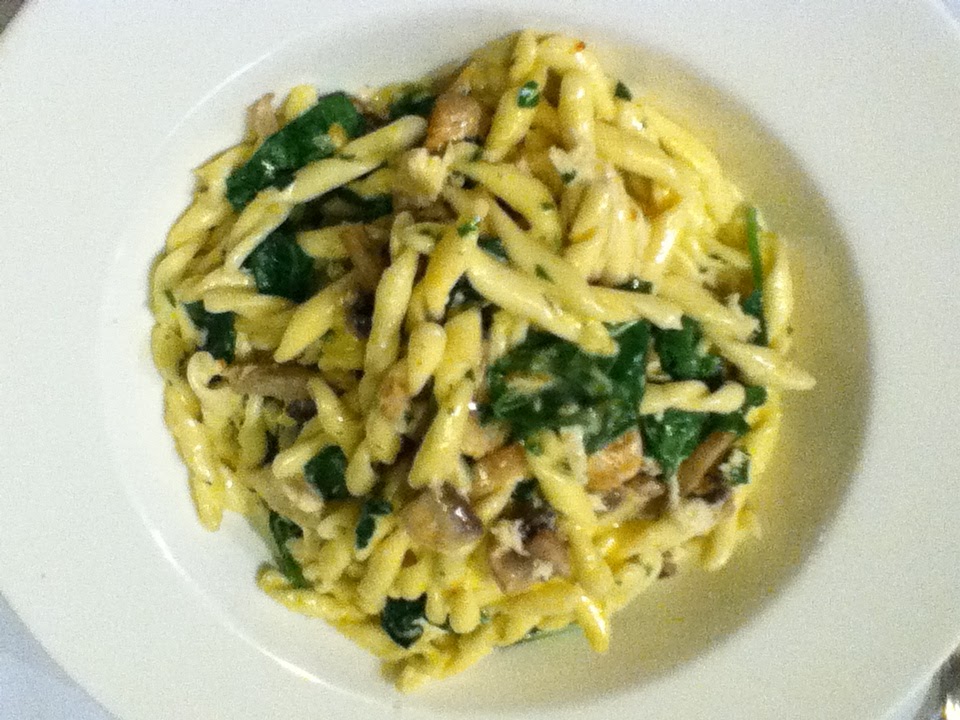
Fusilli con pollo e spinaci
Home-made fusilli with chicken, mushrooms, spinach and parmesan in a light creamy sauce.

The fusilli was tightly wound and cooked 'al dente', but it had that wonderful quality that freshly hand-made pasta possesses. The baby spinach was lightly wilted and the sliced field mushrooms lightly sauteed but retaining a very fresh taste. Interspersed amongst the other ingredients were small chunks of fresh and lightly salted chicken breast, which complemented the other flavours very well. The dish was finished off with a light creamy sauce. The overall combination was quite delicious.


Penne Arrabiate
Penne with home-made spicy sausage, olives and chilli tossed in napoli sauce.

This dish was served with commercial pasta but generous chunks of home-made spicy pork sausage. The tomato sauce had flecks of parsley through it and a very forthright tomato taste with some smouldering then lingering slow burning chili flavour underneath. The pork sausage had a very smooth and rich taste and a "melt in the mouth" quality with visible chunks of meat and just the right amount of fat, but unfortunately I found several pieces of gristle in the section of the dish that I tasted.


Desserts
"The Baldovino" - a house special. An Italian version of 'bread and butter pudding' incorporating fresh blueberries and raspberries and served with a raspberry coulis and vanilla ice-cream. Icing sugar was also sprinkled around the margins of the plate.

The cake component was dense but moist and well-infused with the flavour of the berries and a glistening slightly caramelised topping (possibly from melted sugar on top).


Milk chocolate mousse cake served on a crumbled dark chocolate biscuit base with cocoa sprinkled on the top, a chocolate drizzle across the plate and a fresh strawberry. Icing sugar was also sprinkled around the margins of the plate.

The chewy biscuit base was well-complimented by the light and creamy mousse which had a very smooth texture. Perhaps my only criticism would be that the taste was a little bland for my liking (but I do prefer dark chocolate).


Coffee
The coffee had a good strong and forthright bitter taste with a fullness in the mouth and a lingering aftertaste and a real "tingle on the tongue". There was a nice amount of froth on top of the cappuccino. With the slightly astringent quality that comes with a strong coffee, it was very refreshing and cleansing to the palate at the end of the meal.

The coffee beans come from Coffex, but it is their own 'Baldovino' blend with dark roasted and light roasted Arabica beans.


Baldovino Cafe Bar Restaurant on Urbanspoon 

Movie Review: TED

Last night I attended to a special preview screening of TED (www.tedisreal.com). I must say the eXtremescreen at the Hoyts Cinema was amazing, and the sound to boot! Purchasing tickets online was fairly painless (although there was a small handling fee) and instead of waiting in line there was an "Express" lane that allowed you to pick up your tickets immediately.

From the iTunes information for the TED app:"Creator Seth MacFarlane (Family Guy) brings his boundary-pushing brand of humour to the big screen for the first time as writer, director and voice star of Ted. In the live action/CG-animated comedy, he tells the story of John Bennett (Mark Wahlberg), a grown man who must deal with the cherished teddy bear who came to life as the result of a childhood wish…and has refused to leave his side ever since."

This movie deservedly has an "MA" (15+) rating due to liberal use of bad language, sexual references and illicit drug usage. That said, it also has a 'touchy-feely' plot worthy of any 'chick flick'. Boy in dead-end job has been going out with stunning hot girl (Lori - Mila Kunis) for four years; boy is conflicted between his love for Lori and his love for Ted; boy is often 'sucked in' by Ted and his dubious lifestyle choices; Ted is forced to move out; Ted gets a job and a girlfriend; boy loses girl (who is being pursued by her rich boss); creepy father and son Donny and Robert (Giovanni Ribisi and Aedin Mincks) bear-nap Ted; boy loses Ted, boy and girl rescue a mortally injured Ted; boy gets girl back and together they (unsuccessfully) try to save Ted; girl wishes Ted back to life; boy proposes to girl and they all live happily ever after.

The key cast members do a very good job, and there are delightful cameo appearances by the original Flash Gordon (Sam J. Jones) and Norah Jones as well as Tom Skerritt. Patrick Stewart (of Star Trek fame) as narrator breaks out of his gentlemanly mould and delivers the sometimes blue script with aplomb. The CGI is pretty amazing, and at times you find yourself forgetting that the bear is digitally created. As with Family Guy, there are sci-fi and popular culture references and social commentary (including being "gay-friendly"), and some fairly perverse outcomes - the worse that Ted behaves at work the more he gets promoted!

If you don't like bad language, sex and drugs, this is not a movie for you. However, if you are broad-minded, you are likely to appreciate the humour and feel the occasional tug on your heart-strings as the plot plays itself out. The horror sub-plot is truly creepy (Ted loses an ear and then gets torn in half) and generates a marvellous car chase worthy of any action-adventure movie.

I could have done with less of the bad language etcetera, but it was funny and I did enjoy it. If you take it for what it is - a bit of an 'over the top' reflection on boys behaving badly, redemption through true love and for Donny and Robert (as the Rolling Stones famously sang) "you can't always get what you want", you might just find it an entertaining interlude.

Saturday, June 23, 2012

New St Francis' Choir Music List for June - December 2012


Having been a member of the Choir for many years, it has been one of my pleasures to serve from time to time on the music planning sub-committee. We have recently completed our deliberations for the music for the second half of the year and the music list has now been posted on the Choir website:
http://www.stfrancischoir.org.au/program/program.htm
http://www.stfrancischoir.org.au/program/june-dec2012.pdf
The latest edition of the Friends of the Choir (a support group for the Choir) Newsletter is also available:
http://www.stfrancischoir.org.au/friends/june12.pdf

St Francis' Church is the oldest church still on its original site in Melbourne, with a history stretching back 170 years, and is under the pastoral care of the Congregation of the Blessed Sacrament. The choir has been part of its history for much of that time, and the modern mixed choir is one of Melbourne's finest liturgical choirs, with a repertoire stretching from the Middle Ages to the present day. The choir normally performs at the 11:00 mass on Sundays as well as at all the additional major celebrations during the year, and on these latter occasions is often joined by soloists and orchestra or brass.


St Francis' Choir, Melbourne: http://www.stfrancischoir.org.au/
St Francis' Church, Melbourne: http://www.stfrancismelbourne.org.au/

Grattis på födelsedagen - Happy Birthday from Ikea!

IKEA Richmond
Victoria Gardens Shopping Centre,
Cnr Victoria and Burnley Streets, Richmond
Tel: 8416 5000
http://www.ikea.com/au/en/store/richmond
Visited Wednesday 20 June 2012


Not everyone loves Ikea, but where else can you get free Wifi, a wholesome breakfast for $3.45 on a Wednesday morning plus free coffee and a free mini Swedish Prinsesstårta for your birthday?


A cooked breakfast (09:30 - 11:00) is normally $2.95 and includes bacon, scrambled eggs, half a tomato, a small sausage and a hash brown. It is $1.00 cheaper on Wednesdays, and baked beans and mushrooms are an extra $0.75 each. If you are an Ikea Family member the coffee is free and they send you a voucher for a free small cake for your birthday.

The free Wifi is a bonus, but people are equally happy to sit and read the newspaper or a book if dining alone.


It actually suited me to pay a visit as I wanted to buy a few household items. I also enjoy the cheery reminders of Scandinavia. As a medical stident living in Oslo I used to wait patiently with others to catch a bus from the city centre to one of the two Ikea stores in the suburbs whenever I needed something cheap but practical for my student accommodation and could also take advantage of the reasonably priced food and drink (a relative rarity as many travellers will attest). It is strangely comforting that an Ikea store in Oslo is pretty much the same as one in Melbourne!

At the Richmond store the first hour of parking is free but you can stay for up to three hours if you spend $5.00 in-store.

Coffee review:
Mug of Cappuccino $2.50 or free for IKEA Family members (bottomless in either case)
Rating: 6/10

Although this is not a recognised coffee house, it is a pleasant enough refuge for those after a quick caffeine fix in the midst of more stressful activities such as shopping!
IKEA uses UTZ Certified fair trade coffee and commercial coffee machines offering a limited selection e.g.: Cappuccino, Latte, Long Black. On the plus side, the coffee has a pleasant strong bitter flavour and a good aftertaste. However, there is probably a bit too much froth on top, and it tends to go cold quite quickly. Still an enjoyable cup of coffee and despite the barn-like ambiance it is quite possible to find a quiet corner and take advantage of the free Wi-Fi or alternatively the reasonably priced food offerings (breakfast, lunch and dinner).

Friday, June 15, 2012

Movie Review: The Avengers

The Avengers: http://marvel.com/avengers_movie/

If ever there was a popular culture movie that delivers shock and awe in a sensory smorgasbord which at times almost overwhelms the observer, then this is it. Any number of cliches could apply - "bigger than Ben Hur", "more epic than Gone with the Wind" (both perhaps not films that would be overly familiar to 'Generation Y'!) or perhaps (in a tribute to one of the key characters) even "more malevolent than Lord Valdemort" ("Harry Potter").

I almost did not get to see this movie. What started out to be an innocent plan for a birthday treat culminated in arriving in a shopping centre carpark that was at the time fairly reminiscent of scenes from "Mad Max", and a hasty retreat was beaten once it was clear that there was absolutely no parking to be had.

Things went more smoothly a couple of days later in the evening. (Memo to self: do not under any circumstances go anywhere near a large shopping centre on Saturday mornings!). Having seen "Thor" on an international flight last year provided some background to the current state of affairs for the two heirs to the throne of Asgaard, Home of the Gods, namely Thor and his adopted brother Loki, who is the chief protagonist, having more or less sold the rights to the enslavement of Earth to the highest bidder in the cause of his own aggrandisment.

For those who love Marvel Comics, many of your heroes come together over the course of the movie in a gathering of the clan, without which the Earth would fall to merciless and blood-thirsty alien invaders, who are visually not unlike the Orcs in "The Lord of the Rings". The plot is not that substantial, but takes up old and noble themes - the lust for power bringing about its own downfall, the indominable spirit of Earthlings, the fellowship of a small but courageous band uniting in an apparently hopeless fight and ultimately triumphing over adversity, and lastly, "he who dares, wins".

We see (as the main characters) Commander-in-Chief of S.H.E.I.L.D. Nick Fury (Samuel L. Jackson), The Black Widow/Natasha Romanoff, the Super Spy) (Scarlet Johansson), Captain America (Chris Evans), Tony Stark/Iron Man (Robert Downey Jr), Dr Bruce Banner/The Incredible Hulk (Mark Ruffalo), Thor (Australia's own Chris Hemsworth) and Hawkeye (Jeremy Renner) (who is initially brought under the influence of "the dark side" but is later freed to join in the fight) take on Loki (Tom Hiddleston) and his allies. Along the way a gentle and loyal foot soldier (Agent Phil Coulson - Clark Gregg) loses his life with the effect of bringing this disparate band together and galvanising them into common action. In the final battle the cocky, arrogant and brilliant Iron Man discards his insouciance in order to take on the mission of destroying the aliens and saving Earth even though there is a almost no chance of survival.

There are epic (and loud) battles, and most of Manhattan seems to be destroyed in the process as well as some pretty amazing fights between the superheroes before they settle their differences. Thor, Iron Man and Captain America end up flattening a whole forest with a Tunguska-type blast before Iron Man asks "Are we done here?".

Despite the high drama and high stakes there are certainly other moments of humour. In one scene Thor and The Hulk take on a monster together and defeat it. When they have finished, The Hulk swats Thor to one side "just for the hell of it". At another point, The Hulk is battling with Loki, and after Loki's 'high faluting' claims of superiority ends up pounding him into the ground and uttering the exclamation "puny god!".

The aliens enter the atmosphere through a rift high in the sky. At first their flying scooters do not seem much of a threat, but then a terrifying flying monster blacks out the sky. It is part metal, part machine, part fish-like monster with sharp metal teeth (not unlike the creature in "Alien") and a jagged alligator-like tail that swishes menacingly from side to side. Together with its siblings it proves to be a formidable (but not indominable) foe.

The malevolent, power-drunk and merciless Loki seems hell bent on revenge against both Thor (whom he sees as having ursurped his entitlement to be the heir to Odin in Asgaard) and Thor's beloved Earth. (In the movie "Thor", he was exiled and 'fell to earth' as a mere mortal to learn the error of his ways and the meaning of true humility before being restored to his proper place in Asgaard.) Loki, with his silver tongue and powers of manipulation, was always a dangerous adversary, but here he appears to have morphed into a twisted embodiment of pure evil. Loki seems to send a chill up your spine in a strangely familiar way, and then you realise that he could easily be an older alter-ego of Tom Riddle, the precursor of 'He who shall not be named' in the "Harry Potter" books and films.

Directed by Joss Whedon of “Buffy: The Vampire Slayer”, “Angel” and “Firefly” fame, this movie has an excellent ensemble cast, spectacular special effects and the happy ending that we have come to expect from superhero movies. However, at the end there is a small cameo from one of the aliens on a rocky outcrop in space, where he smiles a crooked smile and states almost with relish that they now know that Earthlings are worthy adversaries who will fight to the death ...

Check your cynicism at the door, buckle up your seatbelts for the willing suspension of disbelief, and enjoy the ride!

Note:
For those of you interested in seeing more of Tom Hiddleston, who plays Loki, he can be seen as a curly blonde mop top Detective Martinsson in Kenneth Brannagh's adaptation of Henning Mankell's "Wallander" crime stories. This is currently screening on ABC1 and is also available on DVD. The Swedish locations are authentic but to me it is a bit bizzare that everyone is speaking in proper British accents! I do prefer the Swedish production (which is screened by SBS) but Brannagh does a good job in playing a troubled and dissolute Wallander who has not lost his magician's touch for solving crimes.

Thursday, June 14, 2012

Mabo: The struggle for Australian indigenous land rights

ABC 1, Sunday 10 June 2012
Docu-drama "Mabo"
Website and video of this program: http://www.abc.net.au/tv/mabo/

Many Australians would be aware that the word "Mabo" is synonymous with the landmark 1992 decision of the High Court which paved the way for recognition of indigenous land rights (often referred to as "the Mabo decision").

However, relatively few people would be aware of the back-story of Eddie (Koiki) Mabo and his wife Bonita and their family, and how their courage and the strength of their relationship allowed them to sustain them in their commitment to a long and taxing cause.

Eddie comes across as a loveable larrikin who believed in himself and the equality of indigenous Australians long before it was either fashionable or legally required. He is exiled as a troublemaker from his home, Murray Island in the Torres Strait, and it is decades before the island Council allows him to return; not even when his father is dying. He has an enquiring mind, and is not afraid to try to expand his mind and his knowledge despite his limited formal schooling. In one memorable scene he is depicted reading the dictionary.

In many flashbacks and references, the close relationship that he feels with his people and his land is depicted, and he forms a somewhat surprising (for the times) alliance with sympathetic white academics and lawyers who take up his cause and the cause of indigenous land rights. They must take on the inherent bigotry and prejudice of the times as well as the infamous Joh Bjelke-Petersen, Premier of Queensland, who tries to pass legislation retrospectively extinguishing native land rights. This legislation is ultimately struck down by the High Court as unconstitutional. Eddie himself comes out second-best in a bruising encounter with the Western legal system of evidence and cross-examination, but the High Court decides 6:1 that the concept of "terra nullius" (vacant land) should not apply where a close connection can be shown to the land by its indigenous traditional owners.

Tragically Eddie died five months before the High Court's decision was handed down, but Bonita and their children were able both to see his quest brought to fruition and to return Eddie to Murray Island as his final resting place.

The Australia depicted in the 1950s and 1960s was not that far removed from the segregation of the American 'Deep South' or the apartheid of white South Africa. Aboriginal Australians were regarded as 'second-class citizens' who were not allowed to vote, had few rights before the law and were subject to segregation in public settings. In one scene we are told that Aboriginals had to enter the cinema via a separate door and sit in a particular area, and in another Eddie is refused a drink when he goes to the pub with several white workmates. Eddie and Bonita and their young son are refused accommodation in a number of hotels simply for being 'black'.

While I was a medical student on a placement with another student in an Aboriginal Community Co-operative in country Victoria, we had our own taste of what it is like to be regarded with mistrust and suspicion in your own land. At one point the male manager launched a long diatribe about white people and, pointing his finger at us, suggested that "you blokes" (we) were responsible for all the ills befalling Aboriginal people. Since we were actually there to help them and to try to improve their health, it was hard to understand why we could not be taken on our merits but we "tarred with the same brush" as the colonial occupiers. It was also interesting that although some local people had left a bowl of beautiful fresh fruit and freshly baked healthy muffins, that when lunchtime came the Co-op members preferred to go into town for Maccas rather than eat the healthy food which had been provided for them. We got to know the women and participated in painting a large mural with them, and when we ran a health screening clinic, it was initially the women who we had built a rapport with who came, and then they spread the word that we were "OK" via the 'bush telegraph' and more people came (but still predominantly women). Aboriginal health outcomes still lag far behind those of non-indigenous Australians, but this experience taught us the importance of working with indigenous people and attempting to gain their trust and understand their culture.

Just in the past few days in the news there has been a discussion concerning a huge backlog of native title claims and the Federal Government's plans for reform in this area. Eddie Mabo has left an enormous legacy, but even twenty years later there is work to be done with reconciling hopes and desires with the ponderous reality of the legal system.

This dramatisation is definitely recommended viewing!

There is also a documentary available on ABC TV iView: "Mabo, Life of an Island Man":
http://www.abc.net.au/iview/?WT.srch=1&WT.mc_id=Corp_TV-iView|Mabo_AdWords_:abc%20tv%20mabo_e_g_19728495079_&gclid=CKvWv5TPz7ACFUlMpgod831TWw#/series/Mabo
and a series of videos from the"480: Mabo" series which was aired around the same time as the movie on ABC TV:
http://www.abc.net.au/tv/mabo/videos/

Saturday, June 9, 2012

Australian Resuscitation Council (Victorian Branch) 5th State Conference. Resuscitation 2012: Translating Evidence into Practice


Australian Resuscitation Council (Victorian Branch) 5th State Conference. Resuscitation 2012: Translating Evidence into Practice.
Saturday 2 June 2012
Australian Resuscitation Council: www.resus.org.au


This was another excellent conference and networking opportunity. There was also a trade display exhibiting a number of new innovations in resuscitation equipment.

The organising committee (all volunteers) did a wonderful job.

Attendees received a 'showbag' on arrival, which included:
- program, name tag and ballpoint pen;
- Statement of Participation;
- flier for the next ARC conference (18-20 April 2013 in Melbourne);
- Mayo Healthcare information on i-gel supraglottic airway, Disposable Resuscitator and EZ-IO intraossesous access system;
- information on Cardiac Science Power Heart AED;
- Everyday Learning CPR Training Manual, BLS pocket card and information brochure (www.everydaylearning.com.au) [Note: The CPR guide is a very high quality resource]; and
- Survival Emergency Solutions CPR Emergency Handbook, Basic Emergency Life Support Guide, First Aid Emergency Handbook and instructions for downloading their iFirstAid app and the ePulication for the Emergency Handbook (www.survival.net.au).

Mayo Healthcare gave away some CPR Pocket Masks (and pens) to people who visited their table, and Survival saved the best until last. Attendees who remained until after afternoon tea were given a free first aid kit. There were three different types and sizes, but I was fortunate to be one of the first in line and received one of the large 'Survival First Aid Kits' - perfect for wilderness first aid! (Photographs of the "goodies" appear at the end of this posting.)

The Welcome by Associate Professor Tony Walker, Chair of the Victorian Branch, was followed by a very personal presentation by Matt Parkinson, Comedian, Actor, Radio Presenter and cardiac arrest survivor. He told with humour and heartfelt gratitude the story of his journey from arresting at an indoor cricket game through a period of unconsciousness and therapeutic hypothermia in ICU to insertion of an implantable defibrillator and his return home and resumption of his normal life. His mates were able to commence CPR and keep him alive until the cavalry arrived, and for those present in the auditorium it was a wonderful reminder that first aid and CPR can save lives and "make a difference".

Print-outs of the Powerpoint presentations by the other speakers were not available at the time of the conference, so I made some brief written notes for each presentation and these have been typed up and can be found below.

Professor Ian Jacobs, National Chair of the ARC and Co-Chair of the International Liaison Committee on Resuscitation (ILCOR) spoke next on "Guideline Changes: Has outcome improved?".

ILCOR was formed in 1994 and has representatives from North and South America, Europe, Asia, Australia and New Zealand and South Africa. It carries out systematic reviews of resuscitation science on five-yearly basis, with the next review due in 2015. There are two major peer-reviewed journals dealing with resuscitation matters - Circulation and Resuscitation.

ILCOR is now moving towards continuous evidence evaluation reviews as opposed to the old system of 'batch and queue' PICO questions. In 2013 ILCOR will meet at the Spark of Life Conference in Melbourne. For each major update it plans to produce a ~30 page summary of each set of updates and other changes will be made as needed based on the evidence, not just every five years. It currently uses its own system for evaluation and labelling of evidence but for 2015 will move to GRADE.

The Utstein Templates for Resuscitation Registries measure and report like with like (reporting outcomes). These have been revised from the original templates (2004). There will be a further review in Vienna in 2012 (to be published mid-2013). The rather humorous "Tony Smith Modification to the Levels of Evidence" was presented.

The question was asked "Has survival improved?". The change from stacked shocks and one minute of CPR seemed to change home discharge from around 25% to around 35% in one study. Other studies (2000-2005) showed a modest improvement. Overall there is a small improvement, but other factors could be contributing e.g., improved community awareness, AED access, etc. However, there is also an issue of quality in CPR - a study by Ornato et al on errors in resuscitation demonstrated that these lead to less ROSC (return of spontaneous circulation), 24 hour survival and survival to discharge. As a result we need to focus on the implementation of Guidelines - do we do what we say or think we are doing?

The next speaker prior to morning tea was Professor Judith Finn, Director of the newly established Australian Resuscitation Outcomes Consortium (Aus-ROC). Her presentation provided an overview of the structure, purpose and planned activities of Aus-ROC and discussed the need for building collaborative research networks in resuscitation.

OHCA (out-of-hospital cardiac arrest) is a leading cause of death. In the USA this affects around 310,000 people per year. The statistics are not well captured in Australia. Another paper by Ornato discusses how research prioritisation and funding is not commensurate with need. For cardiac arrest (as opposed to acute myocardial infarction, stroke and heart failure) and resuscitation there is a very low number of funded studies per 10,000 deaths. Case fatality overall is around 90%. There has been little improvement in survival outcomes over time.

In North America there is the Resuscitation Outcomes Consortium and ROC Epistry (Epidemiological Registry). In a study amongst the member States there was regional variation in survival to discharge of 3% to 16.5%. In Australia in 2008 this was between 8.4% and 12.4% (EMS-treated). What are the confounders? What are the reasons for the differences?

Aus-ROC was recently established to be a multi-centre research and clinical trial coordinating body. This is presently just re cardiac arrest. There are plans to establish an 'Epistry'. The 'Chain of Survival' diagram demonstrates that good outcomes are system-based. Post-resuscitation care is also an issue that needs attention. The RINSE (paramedic) study has been looking at rapid cooling during CPR using cooled normal saline.

There are a number of ways that we can build capacity in resuscitation science, but this beings with building relationships. Funding is worthwhile from an economic perspective as practitioners are doing their best to return people to taxpayer status! At present there is $2.5million funding from the NHMRC, which is funding some post-doctoral researchers, PhD students and a part-time Director and administrative support.

After morning tea Associate Professor Julie Considine, Chair of the Basic Life Support Committee of the ARC spoke on "Basic Life Support: Understanding BLS practice from an evidence-based perspective".

The best way to get good outcomes from cardiac arrest is to prevent them from happening in the first place e.g., recognition and care of the deteriorating patient.

Danger - move someone if you have to .
Positioning:
- if unconscious/breathing, turn to lateral position; and
- face down and unresponsive - roll to supine position.
Response - signs of life removed: now unresponsive and not breathing normally.
Send for help - principle more important than actual timing.

Airway:
- takes precedence over neck;
- no need to routinely roll onto side;
- adults/children - head tilt/chin lift;
- infants - neutral; and
- finger sweep - not routinely (but yes if solid material visible).
Choking - Heimlich not recommended (evidence of harm) but still used internationally.

Breathing:
- look/listen/feel;
- now compressions then ventilations (may be different in drowning scenario/Surf Lifesaving; and
- rescue breathing - various options;
- make sure it is working; and
- may need two people for BVM.

Compressions-only CPR permissible.
During the first five minutes of cardiac arrest adults maintain an O2 saturation over 80-85%.
Ventilation not so important as opposed to uninterrupted cardiac compressions.
Cardiac arrest is not a normal physiological state, therefore reduced need for ventilation.
Over-ventilation common during CPR:
- hyperventilation/excessive tidal volumes especially if using BVM; and
- potentially harmful effects.
Barrier devices are probably helpful

Compressions - lower half of sternum; and 
- pulse check unreliable.
Technique/Depth/Rate/Quality Control/Risks.
Chest compressions:
- 25-30% normal cardiac output;
- Systolic BP 60 to 80mmHg;
- Cerebral blood flow 30-40% of normal; and
- Coronary blood flow 10-20% of normal.
Coronary perfusion pressure has a direct correlation with ROSC e.g., CPP over 15mmHg.
With 30:2 keeping CPP up higher for longer.
Even experts have room for improvement technique-wise.

AEDs have a role both in and out of hospitals - accurately identify rhythms as shockable/non-shockable.
Pad placement and size:
- standard adult pads can be used in adults and children from 8 years of age; and
- can use in a child under 8 if there is no other option available.
Skin contact very important for successful defibrillation.
Safety - no reports of harm (with soft gel pads) in wet environments or presence of oxygen.
VF (ventricular fibrillation) rarely reverts spontaneously - need defibrillation.
Generally successful if occurs under 10 minutes post-arrest, but CPR can extend window.

Next we experienced a 'high octane' presentation by Associate Professor Peter Morley, Deputy National Chair and Chair of the Advanced Life Support Committee of the ARC on "Advanced Life Support: Understanding ALS practice from an evidence-based perspective".

Due to the high volume of slides and the fast pace, it was not possible to record more than a very rudimentary summary of this talk.

Answerable questions and worksheet links can be found on the ILCOR website.
Evidence supports better outcomes with ALS CPR.
Quality-wise could do better.
Too fast/too slow.
Ventilations too fast.
Compressions too shallow - depth over 5cm (5-6cm) (or 1/3 of the depth of the chest) (children 5cm, infants 4cm).
No benefit in going too fast - fatigue/leaning/cycles too short.
Metronomes can be useful.
"Goldilocks Principle".

Longer pre-shock pause - shock success less likely.
Charging defibrillator during compressions can save time.
Drugs in CPR - short-term benefits but not statistically significant in survival.

ETCO2 parallels pulmonary vascular flow.
Animal model - even 12 breaths per minute too much.
Advanced airway: 15:1 (better to synchronise).
5-6 breaths/minute probably ideal; presently in Guidelines 8-10 breaths/minute.
Mechanical CPR - promising but insufficient data at present.
(Hawthorne Effect - people perform better when aware being observed.)
Benefits from regular teaching and monthly practice (study re nurses).

Then it was time for lunch! The first presentation after lunch was by Dr Ken Winkel, Director of the Australian Venom Research Institute on "Research Translation: Snakebite in Papua New Guinea: Wokabaut wantaim - raka hebou - Walking Together".

Community first aid and application is very important in management of venomous bites and stings. This is a case of translation of research into practice. Australian and PNG snakebite issues are similar.

Injury, disability and mortality are all factors. Limb loss about 250,000 - 400,000p.a. worldwide (necrotising venom). Mortality around 80,000 - 125,000p.a. Snakebite = a neglected tropical disease. Annual cases about 4.5 - 5.4 million worldwide. Asia/Africa/South America - children can be especially vulnerable.

PNG and Australia - a single antivenom can be used for all snakebites (AVG Polyvalent). Snakebite fatality about 100x in PNG. Transportation challenges, long transfers, lack of resources. Savannah grassland - perfect taipan habitat. PNG: mean time ~4 hours to presentation (range 15mins to 48 hours).

Need to disseminiate teaching, bandages re pressure immobilisation techniques. Using another supplier to produce a similar but much cheaper antivenom. More than 1/2 ICU beds are used for snakebite (antivenom may not be available; too costly). Mortality: 15% adults, 26% paediatric. Rural: 33/100,000/year. People were rationing antivenom, only using a bit of it, waiting until someone was really sick. Need to use it early at the first sign of neurotoxicity. No dialysis in PNG.

Have set up a global snakebite initiative. Antivenom is the most cost-effective medicine in the world.

The next speaker was Associate Prfoessor Stephen Bernard, Intensive Care Specialist, Alfred Hospital, and Medical Advisor, Ambulance Victoria. He spoke on the topic of "What will post-arrest management look like in 2020?".

For instance, the person affected will be taken to the post-arrest centre for evaluation by the cardiac arrest team. Management is likely to include an SBP>100, no supplemental inspired oxygen, therapeutic hypothermia and sedation. Patients will be transported to a major cardiac centre in the same way that they are now transported to a major trauma centre. Some studies have shown better outcomes if patients are transported to a hospital that is also a major trauma centre - teamwork approach.

Increasing animal data shows that 100% oxygen may be harmful post-arrest. Bad for the brain and the heart. Exaggerated reperfusion injury. A review in Resuscitation April 2012 - pooled results favour normoxia after ROSC. An ICU study showed an association between PaO2 on first ABG after arrest and in-hospital mortality. Normoxia was more favourable. How do you provide different fractions of O2 in an ambulance (don't have blenders)? How reliable is the pulse oximeter?

Proposed Australian/NZ study for hyperoxia versus normoxia. AVOID trial - STEMI patients allocated to supplemental O2 or no supplemental O2 (?higher levels of O2 increase cardiac injury).

Push SBP 100mmHg. Improve oxygen delivery, minimise adverse cardiac effects (some research to support this).

Transport to cath lab - STEMI, shock, arrhythmias. 12 lead not sensitive enough. 58% of patients without a STEMI had a lesion.

Therapeutic hypothermia. IV/surface/core cooling (>= 24 hours post-arrest) e.g., 33 degrees Centigrade. RICH trials. Velomedix peritoneal lavage - temperature drops in 6.5 minutes to 34 degrees (maintains temperature very accurately; 34 hour automated treatment).

Post-cardiac arrest team starting at the Alfred next week (ED/Cardiology/ICU).

Cautious prognostication days 4-6. Things may not be as they seem!

The final speaker after afternoon tea was Associated Professor Jim Tibballs, Deputy Director of Intensive Care, Royal Children's Hospital, and Chair, Paediatric Advanced Life Support Committee, Australian Resuscitation Council.

The Paediatric Guidelines don't apply at birth or within a few hours after birth (Neonatal period). Once the lungs are fully expanded and pulmonary hypertension is resolved then this becomes the paediatric period.

Prefer ventilations in the paediatric world with CPR. Don't spend more than 10 seconds palpating a pulse. No IV access - go for intraosseous access. Start with 100% O2 and then titrate to PaO2 80-100mmHg. Compressions 1/3 A-P diameter. Compressions:ventilations 15:2 (may give 2 breaths first). Intubated - 10 breaths per minute. Detect expired CO2 - confirm intubation, monitor effectiveness of CPR. BVM OK, ETT better. Defibrillation single shock 4J per kg then 2 minutes CPR. Minimise interruption to compressions Asystole, bradycardia - give adrenaline. 30:2, 5 cycles in two minutes = approximately 75 compressions per minute, 5 breaths per minute.

Diagnose cardiac arrest by pulse palpation (Resuscitation 2009 and 2010). 150 doctors and nurses and paediatric patients on ECMO - does the patient have a pulse - YES/NO? Reliability 78% (wrong 22%). Sensitivity - diagnosed cardiac arrest 86% (wrong 14% - no CPR but needs it). Specificity -64% (diagnose arrest incorrectly 36% - CPR even though not needed). When pulse truly absent needed 30 seconds to decide (experienced operators 25 second, inexperienced 37 seconds). If the pulse was present the average was 13 seconds (9 seconds/21 seconds) - where the 10 seconds (for experienced operator) comes from. Don't ask laypersons to feel for a pulse.

Animal models (and mathematical) - 30:2 favoured for O2 transport. If low ratios, too much time off chest, too much ventilation. 15:2 - paediatric ventilation requirement greater than for an adult. Hypoxic arrest/asphyxia more common. Asphyxial cause - standard CPR. Cardiac cause - standard CPR or compressions only fairly effective. 15:2, 5 cycles in 1 minute - approximately 75 compressions and 10 breaths in a minute.

Why resume ECC immediately after DC shock? The importance of not interrupting ECC (more interruptions result in worse outcome, reduced survival and lower probability of successful defibrillation). Importance of restricting ventilations. Efficacy of a single shock.

Why the adverse effects of 'hands-off'? Coronary perfusion pressure during CPR: with increasing number of compressions the aortic pressure rises above right atrial pressure. Excessive ventilations reduces survival. Less ventilation results in increased CPP and increased pulmonary blood flow. Adequate chest rise in an adult = 5=6mL/kg.

If stacked shocks, 84%/8%/5% likelihood of success. ROSC not synonymous with successful defibrillation. ECC - push hard, push fast, don't interrupt! Ventilate to ETCO2. Children - better ROSC with 3-5J/kg (where the 4J comes from) but better to use adult AED if have nothing else available. ETCO2 monitoring - ETT detection, assess effectiveness of CPR (ETCO2 >15mmHg).

Watch this space!
The 9th International Spark of Life Conference "Resuscitation Systems of Care - A Team Effort" will be held at the Hilton on the Park, Melbourne on 18-20 April 2012. For further details see: www.resus.org.au.


Wednesday, June 6, 2012

Monash Disaster Resilience Initiative

Last week I attended a great forum on "Managing internally displaced people" organised by MDRI, which is part of the Monash University Injury Research Institute. There were a number of local and international speakers as well as some panel (and general discussions). When I walked in (slightly late) I could hear the voice of the legendary Professor Skip Burkle, a US academic and doctor who is part of the Harvard Humanitarian Initiative and lectured to us as part of the Master of Emergency Health course on a number of occasions. However, Skip was nowhere to be seen! After quickly considering a number of hypotheses I realised that Skip was talking to us via Skype and the slides were being advanced locally. Later during the Forum Peter Cameron from NZ also spoke to us via Skype. This worked brilliantly and was a fantastic way of hearing from an international expert with an opportunity to ask questions after the presentation. Monash is to be congratulated on this innovative approach!

The program was divided into four sessions:
1. Setting the scene: managing internally displaced persons in the setting of disasters and emergencies;
2. A case study from our region - interactive session; 
3. Strengths of the international standards and guidelines that could be implemented domestically to augment 
current practices; and
4. If we wish to augment current practices, what are the barriers and solutions to implementation? 

MDRI runs several meetings each year, with the next one planned for late July.

For more information about MDRI see:
http://www.monash.edu.au/miri/research/research-areas/disaster-resilience/monash-disaster-resilience.html
For further information about MIRI:
www.monash.edu.au/miri

A healthy Scandinavian lifestyle!

When I lived in Norway one of the things I loved to see was people of all ages out cross-country skiing. Parents would ski pulling babies and small children in pulks behind them. Sometimes dogs would pull their owners along! People of all ages were out skiing for both exercise and pleasure, including the elderly. Children are taught to ski almost as soon as they can walk, and there is a joke that Norwegian children are born "with skis on". Being an enthusiastic devotee, of course I assumed that all Norwegians love to ski, but some of my friends had to set me straight about that!


I remember one time I was skiing home after a tour around Sognsvann (a large lake on the outskirts of Oslo) and a group of people suddenly crashed out of the forest, ran across the ski trail and disappeared again. I had absolutely no idea what this was all about, but it was later suggested that they were probably an orienteering group.

Orienteering is also very popular in Scandinavia. Not only your standard orienteering, but also ski orienteering and biathalon orienteering.

Some friends of mine in Sweden are heavily involved in orienteering, both locally and internationally, and it is an activity that they have been able to do as a family. I was interested to discover whilst visiting a couple of years ago that the sports psychology side of orienteering is taken very seriously indeed and is the subject of academic research and teaching.

Their local club is based where they live in a satellite suburb of Stockholm. (www.tabyok.se). Very considerately some of the information on the website is also available in English. Have a look if you are interested to see how orienteering is approached in Sweden.

It is lovely to see the wholesome and family-based nature of this sport, the enthusiasm of the people who have made a lifestyle out of it, and the support which is provided to participants at all levels. If you're looking for a sporting activity that gets you outdoors (without getting lost), keeps you fit and allows you to make lots of new friends then perhaps orienteering would be something good to try!

Melbourne Symphony Orchestra 2012 Season - Belshazzar's Feast

Friday 25 and Saturday 26 May at 8pm, Melbourne Town Hall
Bramwell Tovey: conductor and piano
Deborah Humble: mezzo-soprano
Jonathan Lemalu: bass-baritone
Melbourne Symphony Orchestra Chorus
Jonthan Grieves-Smith: chorus-master
www.mso.com.au

Britten - The Young Person's Guide to the Orchestra
Lambert - The Rio Grande
Walton - Belshazzar's Feast
Duration: 2 hours (including an interval of 20 minutes)


Through the good offices of a member of my choir who is also a member of the Melbourne Symphony Orchestra Chorus, I was able to attend this concert recently.

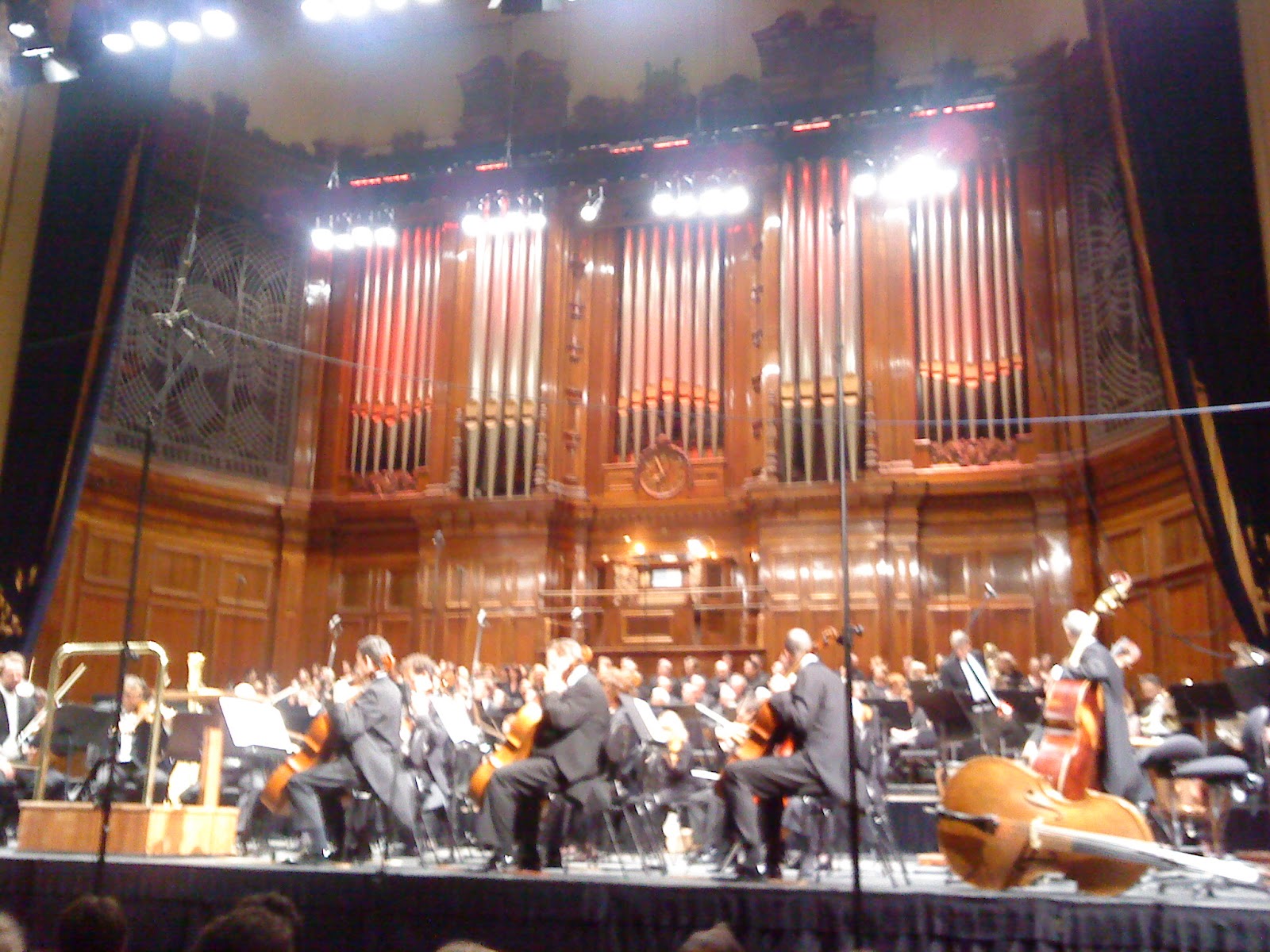
The Melbourne Town Hall is one of Melbourne's beloved icons, as is its grand concert organ. There was seating on the ground floor as well as on the balconies and the orchestra and chorus were seated on the stage. The chairs were surprisingly comfortable, with a goodly amount of padding and good back support, so I did not experience my customary amount of squirming when having to sit still in an uncomfortable seat for a long period. My only complaint would be that the chairs were bolted together with an inadequate amount of space for moderately sized people to sit 'shoulder to shoulder', so a certain amount of squirming became inevitable to avoid personal space encroachment! The cardinal red livery of the attendants was spectacularly attractive, and you really felt as if you were attending an event of importance. The men of the orchestra were wearing tails and (mostly) shiny black patent leather shoes, and the ladies were dressed in black.

Once I read the concert program (another surprise - this was free of charge and also available through the MSO website), I realised that the program choices had quite cleverly been put together. All three of the composers were contemporaries and it appears that Lambert and Walton had friends and muses in common through the Sitwell family. The program notes are truly excellent and well worth reading.

Britten's piece is based around a theme from the music of Henry Purcell (which should be well-known to most choristers and church-goers). The opening with the full orchestra was almost visceral, and generated strong emotions within me. A very large orchestra was assembled on stage, including six double-basses, and it was a joy to see and hear in a three-dimensional space the way that the theme was passed from section to section and the differing timbres of the instruments. At one point you cn almost hear a hornpipe being played, and yes, the theme is the Hornpipe from a suite composed by Purcell for the play Abdelazar (but also taken up elsewhere). The work concludes with a fugue and a powerful climax involving the full orchestra. Tovey's conducting was very animated and demonstrative, and at one stage he did a Napoleonic impersonation with one hand tucked into his jacket!

I do not recall having heard the Lambert piece before, and it very much reminded me of a film score, and at one stage it was highly reminiscent of the introduction to John William's "Star Wars" theme, and you almost expected to see Darth Vader stride onto the stage! There are plenty of jazz and blues references, and the piano part was very ably played by Tovey alongside his conducting. There was surprisingly little work for the mezzo-soprano soloist. Deborah Humble looked resplendent in a full-length gold lame gown and acquitted herself well vocally.

The highlight of the concert was Walton's "Belshazzar's Feast". The chorus was well-drilled with clear enunciation but was drowned out at times by the orchestra. Jonathan Lemalu was impressive, with a powerful voice and presence, and you could actually physically feel the vibrations from his voice. Tovey's conducting was frequently frenetic, and it did appear (from behind) to be difficult to follow his beat, but my choir colleague later explained that he adopts a technique of conducting by entry and line rather than globally. In any event, the orchestra and choir had it all worked out and combined to produce an excellent synergistic result. The string playing was tightly coordinated, both visually and aurally. The dramatic climax involved brass players on both balconies and the organist bringing the full power of the organ to bear on the final chord, after patiently waiting for what must have seemed like an eternity!

The enthusiastic applause of the audience went on for quite some time, reflecting the quality of the performances that had been delivered.

It was a marvellous concert, and I came away feeling both energised and entertained in the best possible way. There is no doubt that listening to a recording is no substitute for hearing and seeing an orchestra and chorus 'in the flesh', and I felt privileged to be there. If all the MSO's other offerings are of an equally high standard then Melbourne has a lot to be proud of.

Should we support live music at all levels? Absolutely! I love being a performer myself and it always gives you a 'warm inner glow' to have an appreciative audience after you know that you have given your best. Many academic papers have been written on the benefits of choral singing for good health (including both the immune system and mentally) and on the 'Mozart effect' for improving performance. Ironically as a performer I can find it hard to sit and listen to others as I would rather be 'doing', but with this concert it was a pleasure to sit transfixed and enjoy a sublime experience.

The Friday night concert was recorded and is available for streaming on the MSO website and will be broadcast on ABC Classic FM.

Not something you see every day on the way home on the train - a life-size teddy bear!

Pop Restaurant doesn't quite go off with a bang!

Pop Restaurant on Urbanspoon
http://www.poprestaurant.com.au/
Group Function upstairs
Lunch, Sunday 3 June 2012


My choir was recently shouted to a finger food lunch at this restaurant as a 'thank you' for its efforts over the course of the year.

The function was held in a spacious upstairs room, which has an oriental flavour with red lanterns hanging from the ceiling and dark wood panelling. There are padded benches around two walls of the room, and comfy dark brown club lounges and chairs in the remainder of the room with red also being a theme with the loose cushions. There was some light jazz playing in the background when we arrived, but this was turned off in the interests of conversation.

Arrangements had been made to supply wine, beer and soft drink to the attendees, and having a strict "don't drink and drive" policy I stuck to the orange juice, so this review relates to the finger food.

The food was brought around on white porcelain trays by two young waiters - a personable Irishman and a less communicative Frenchman. Distribution was a bit patchy, and as I was sitting with a group in the furthest corner of the room we did miss out to some extent.

1. Thin toasted 'French' bread with a slice of thinly cut rare beef and a caper on top.

2. What was described as "tortillas": a stack of very bland compressed tortilla and potato with a foodpick through the centre and a small piece of red capsicum on top. Not very popular.

3. Grilled chicken on skewers with a tasty chilli and coriander dipping sauce. These were very nice.

4. Deep fried zucchini and goats cheese nuggets. I felt that the flavour of these didn't quite work in terms of the two components complementing each other. The zucchini tended to overpower the other more subtle flavour.

5. Deep fried breadcrumb-coated baby red capsicum stuffed with goats cheese. These were nice and also very popular.

6. Baby meatballs served in a pot with tomato ragout and accompanying pieces of lightly toasted sour dough bread. The meatballs were a little bland and really rather tricky to eat with the toast (being the challenge of successfully attaching a round ball to a flat object for long enough to place it in your mouth!).

7. Long spiky and thin fillets of fish deep fried in a fluffy golden batter and a white aioli or spicy Moroccan dipping sauce. The fish was quite delicious, and this one was also very popular.

Some people managed to get tea, coffee or hot chocolate, but not all of us received the offer, which was a bit disappointing.

Although I like the occasional serve of fish and chips, I am not otherwise a great fan of deep-fried food, and felt that the choices offered did not have enough variety in terms of light and fresh food. There was a lot of protein (meat, chicken, fish, cheese) without much foil by way of vegetables and fruit. It was also a pity that the way that the chicken and fish was presented meant that people could only take a very small amount of the dipping sauce in order to avoid cross-contamination.

Everyone did have a good afternoon in terms of socialising, and by and large found something to enjoy amongst the food on offer, but it was a pity that the service was not more evenly distributed.

It was clear that the food was freshly prepared, which was a plus, and one thing I cannot say is whether the menu choices were determined by the organisers or the chef of the day.

Apart from the failure of the 'tortillas' to excite and the logistical challenges of consuming the meatballs, the preparation and quality of the food was of an acceptable standard, as was the venue.

One can only conclude that it is possible to run a successful function in this setting, but it would be worth devoting some time and effort into ensuring that the menu is a bit more varied and capable of being enjoyed (and easily eaten) by all.